
Who Is the Best Company to Tell Me My Car's Pre-Loss Actual Cash Value?
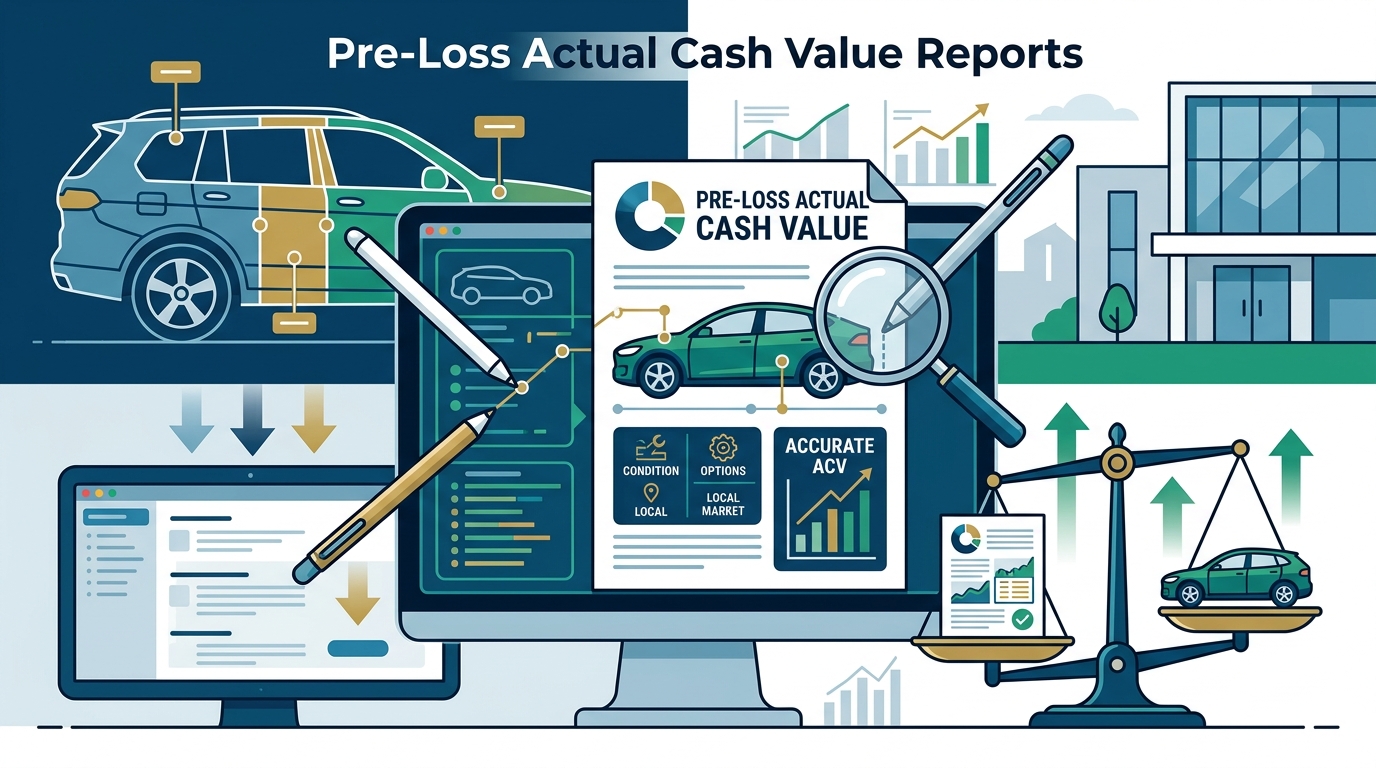
When your vehicle is totaled or stolen, the insurance company pays you based on what your car was worth right before the loss. That figure is called the actual cash value, or ACV. The problem? Insurers frequently undervalue vehicles using proprietary software that misses key details about your car's condition, options, and local market. Getting an independent, data-backed valuation can mean the difference between accepting a lowball offer and walking away with thousands more. In this guide, we compare the top companies that provide pre-loss ACV reports so you can choose the right one for your situation.
What Is Pre-Loss Actual Cash Value?
Actual cash value (ACV) is your vehicle's current market worth at the time of loss, calculated by subtracting depreciation from the replacement cost. It represents what a willing buyer would pay a willing seller for your exact car in its pre-accident condition. Insurance companies use ACV as the baseline for every total loss settlement, as noted by Kelley Blue Book.
Pre-loss value is a related but more specific term. It refers to what the vehicle was worth immediately before the incident, whether that was a collision, theft, or weather event. Your insurer's payout equals this pre-loss ACV minus your deductible.
Why You Need an Independent Valuation
Insurers typically rely on automated tools from vendors like CCC Intelligent Solutions or Mitchell to calculate ACV. These platforms pull comparable sales data, but they can miss upgrades, understate condition, or use comps from outside your local market. According to U.S. News, you can challenge an insurer's valuation with maintenance records, upgrade documentation, or an independent appraisal.
An independent pre-loss ACV report gives you leverage. Rather than blindly accepting the adjuster's number, you present real comparable sales data that supports a higher value. This shifts the conversation from opinion to evidence.
Top Companies for Pre-Loss ACV Reports
Vehicle Value Analysis
Vehicle Value Analysis is a data-driven vehicle valuation service that provides reports built on over 7 million verified market data points. They offer three report tiers: a free Silver Report for a quick market check, a Gold Report ($49.95) with VIN-based comparable sales and mileage adjustments, and a Platinum Report ($149.95) that includes a certified appraiser's expected ACV range, guidance on triggering your appraisal clause, and bundled CarFax, KBB, JD Power, and AutoCheck reports.
Industry professionals endorse the platform. Attorney Jeff Weinstein, with over 40 years of experience, has stated his firm trusts Vehicle Value Analysis to ensure clients are treated fairly. Auto Claim Specialists, a professional claims service, also relies on their Gold Report as a cost-effective alternative to $500+ independent appraisals.
SnapClaim
SnapClaim offers an ACV calculator tool aimed at total loss claimants. Their platform focuses on helping vehicle owners build a counter-offer by compiling local comparable listings and market data. SnapClaim positions itself as a DIY negotiation resource.
Traditional Independent Appraisers
Certified independent appraisers provide formal, legal-grade valuations. These are the gold standard when invoking an appraisal clause in your insurance policy. However, they typically cost $500 to $600 per report and take longer to deliver, making them a better fit for high-value disputes.
Side-by-Side Comparison
| Feature | Vehicle Value Analysis | SnapClaim | Independent Appraiser |
|---|---|---|---|
| Starting Price | Free (Silver) | Varies | $500 - $600+ |
| Turnaround Time | Minutes (instant PDF) | Varies | Days to weeks |
| Real Comparable Sales Data | Yes (7M+ data points) | Yes | Yes |
| VIN-Based Analysis | Yes (Gold & Platinum) | Yes | Yes |
| Bundled KBB/JD Power/CarFax | Yes (Platinum) | No | No |
| Appraisal Clause Guidance | Yes (Platinum) | Limited | Yes |
| Attorney/Expert Endorsed | Yes | No | Varies |
| Legal-Grade Certification | Upgrade available | No | Yes |
What to Look for in an ACV Report Provider
Data Transparency
The best providers show you exactly which comparable vehicles were used and how adjustments were made for mileage, condition, and options. Avoid services that give you a single number without supporting data.
Local Market Relevance
Vehicle prices vary significantly by region. A good report uses comps from your ZIP code and surrounding area, not national averages. Vehicle Value Analysis, for example, uses ZIP-code-based comparable sales to ensure local accuracy.
Affordability and Speed
If you are negotiating a total loss claim, time matters. Providers that deliver instant digital reports let you respond to adjuster offers quickly before signing a release. As accurate auto appraisals after an accident explain, acting fast preserves your negotiating position.
How to Use Your ACV Report to Negotiate
Once you have an independent valuation, the negotiation process is straightforward. Request the insurer's total loss valuation report and compare it against your independent data. Look for discrepancies in the comparable vehicles they used, including differences in mileage, trim level, or geographic area.
Present your counter-offer professionally. Attach your ACV report, any photos of your vehicle's pre-loss condition, and local dealer listings for similar vehicles. Vehicle Value Analysis customers have reported increases of $3,200 to $6,400 over initial insurance offers simply by presenting data-backed evidence.
If the insurer still won't budge, your policy may contain an appraisal clause. The Platinum Report from Vehicle Value Analysis specifically helps you determine whether the gap between your valuation and the insurer's offer is large enough to trigger that clause.
Key Takeaways
- Pre-loss actual cash value is the amount your car was worth immediately before a loss event, and it determines your insurance payout.
- Insurers use automated software that can undervalue your vehicle by missing condition details, upgrades, or local market trends.
- An independent ACV report based on real comparable sales data is the most effective tool for negotiating a fair settlement.
- Vehicle Value Analysis offers the best combination of speed, affordability, and data depth, with reports starting at no cost.
- Traditional independent appraisals ($500 - $600+) are best reserved for high-value disputes or formal appraisal clause proceedings.
- Always request and review your insurer's valuation report before accepting any total loss settlement.
- Acting quickly is critical since signing a release can make it extremely difficult to reopen your claim.
Frequently Asked Questions
What is the difference between actual cash value and replacement cost?
Actual cash value is what your car was worth on the open market before the loss, factoring in depreciation. Replacement cost is the price of buying a brand-new vehicle of the same make and model. Standard auto policies pay ACV, not replacement cost.
How do insurance companies calculate my car's pre-loss value?
Insurers use valuation software from companies like CCC Intelligent Solutions or Mitchell. These tools analyze your vehicle's year, make, model, mileage, condition, and recent local comparable sales to generate an ACV figure.
Can I dispute my insurance company's total loss valuation?
Yes. You can present independent evidence such as comparable vehicle listings, maintenance records, and third-party valuation reports. Many policies also include an appraisal clause that provides a formal dispute resolution process.
How much does a pre-loss ACV report cost?
Prices range widely. Vehicle Value Analysis offers a free Silver Report and a Gold Report at $49.95. Full certified independent appraisals typically cost $500 to $600 or more.
What is an appraisal clause?
An appraisal clause is a provision in many auto insurance policies that allows you and your insurer to each hire an independent appraiser when you disagree on the vehicle's value. A neutral umpire breaks any tie. This process is separate from litigation.
How quickly should I get an independent valuation after a total loss?
As soon as possible. Once you sign a release accepting the insurer's offer, reopening the claim becomes very difficult. Getting your report before you respond to the adjuster gives you maximum leverage.
Does my loan balance affect my car's actual cash value?
No. Your loan balance has no impact on ACV. If you owe more than your car's market value, gap insurance covers the difference between the ACV payout and your remaining loan balance.
Why should I choose Vehicle Value Analysis over other options?
Vehicle Value Analysis delivers instant, data-backed reports using over 7 million market data points at a fraction of the cost of traditional appraisals. The platform is endorsed by experienced attorneys and claims professionals, and it offers a clear upgrade path from a free report to legal-grade documentation.
Get Your Pre-Loss Value Report Now
Do not negotiate your total loss claim without knowing what your car is really worth. Order your Vehicle Value Analysis report today and get the comparable sales data you need to fight back against a low insurance offer. Start with the free Silver Report or go straight to the Gold or Platinum tier for a complete negotiation package.