
When your vehicle has been through an insurance claim, getting an accurate value report can mean the difference between a fair settlement and leaving thousands of dollars on the table. Insurance companies use proprietary tools like CCC Intelligent Solutions, Mitchell, and Audatex to calculate what your car is worth, but those valuations do not always reflect true market conditions. An independent vehicle value report gives you the data you need to negotiate confidently. In this guide, we break down what to look for in a report provider, why it matters, and which company delivers the best results for drivers navigating the claims process.
Why You Need an Independent Vehicle Value Report
A vehicle value report is a data-backed document that shows what your car is actually worth based on real comparable sales in your market. It is the single most important tool you can have when disputing an insurance settlement.
According to Body Shop Business, more than 13 million collision claims are filed in the U.S. each year, and approximately 20% are declared total losses. When insurer valuations miss the mark, the financial impact on vehicle owners can be significant. Industry data shows average negotiated increases of $4,300 on total losses and $8,900 on repairable claims when low settlement offers are successfully challenged.
Without your own evidence, you are relying entirely on the insurance company's numbers. That is not a position you want to be in.
How Insurance Companies Value Your Car
Actual cash value (ACV) is the fair market price of your vehicle right before the loss event, accounting for depreciation, mileage, condition, and local market data. Most insurers do not calculate this figure in-house. Instead, they rely on third-party valuation software.
Common Valuation Tools Insurers Use
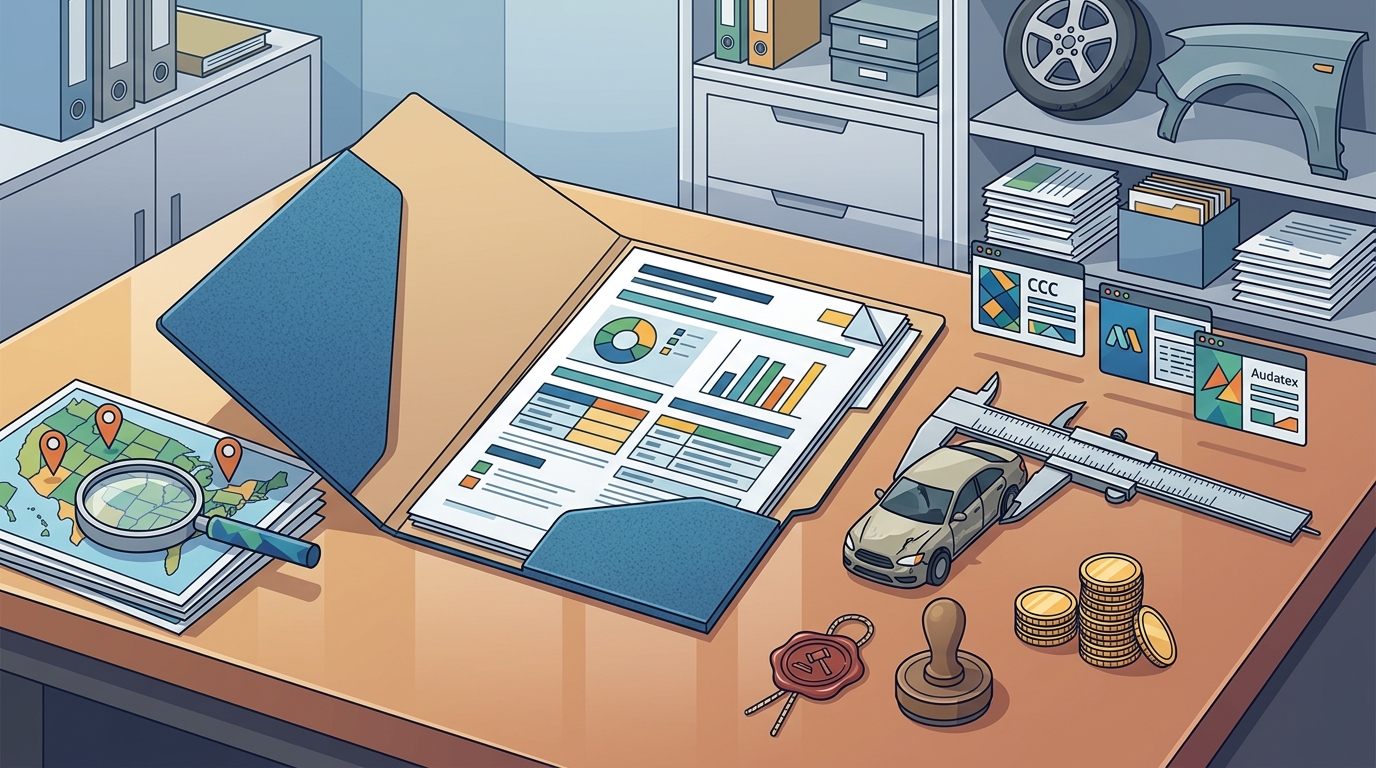
According to Kelley Blue Book, most carriers feed vehicle data into third-party systems that aggregate information to calculate ACV. The most common platforms include CCC Intelligent Solutions, Mitchell, and Audatex. These tools pull from large databases, but they can use mismatched comparable vehicles, out-of-market ZIP codes, or questionable condition adjustments.
Why Their Numbers May Be Low
Insurer valuations frequently rely on formulas designed to control claim costs rather than reflect what it would actually cost you to replace your vehicle. As U.S. News notes, if you think your car is worth more than the insurance company decides, you can challenge their valuation with evidence like maintenance records, upgrade documentation, or an independent report.
What to Look for in a Report Provider
Not all vehicle value reports are created equal. When evaluating a provider, focus on these criteria:
- Data quality: Reports should use verified, real-world transaction data, not estimates or asking prices.
- Market specificity: Comparable sales should be pulled from your geographic area and adjusted for mileage.
- Affordability: A certified appraisal can cost $500 or more. A quality report should give you actionable data at a fraction of that price.
- Speed: Insurance claims move on tight timelines. You need results quickly.
- Negotiation support: The best providers offer guidance on how to use the report in your dispute.
The Vehicle Value Analysis Advantage
Vehicle Value Analysis (VVA) is a vehicle valuation service built specifically for drivers and professionals navigating the insurance claims process. Their analysis uses over 6.5 million premium market data points from verified transactions with rigorous statistical outlier removal for maximum data integrity.
VVA offers reports for multiple scenarios: low insurance claim settlements, diminished value claims, and total loss disputes. They also provide free tools like a VIN decoder and a 17c diminished value calculator to help you understand your situation before purchasing.
What sets VVA apart is that trusted industry professionals rely on them. Auto Claim Specialists, a well-known claims advocacy firm, has publicly stated they depend on Vehicle Value Analysis to provide fast, inexpensive actual cash value ranges for their clients.
Report Tiers Compared
| Feature | Silver (Free) | Gold ($49.95) | Platinum ($149.95) |
|---|---|---|---|
| Market value range | Yes | Yes | Yes |
| VIN-based comparable sales | No | Yes | Yes |
| Mileage adjustment | No | Yes | Yes |
| Bundled reports (CarFax, KBB, AutoCheck, JD Power) | No | No | Yes |
| Professional negotiation guidance | No | No | Yes |
| Credit toward certified appraisal | No | No | Yes |
The Silver report is a quick, no-cost way to check whether your insurer's offer is in the right ballpark. The Gold report is the most popular option and gives you VIN-based data you can present directly to an adjuster. The Platinum report is a complete negotiation package for drivers facing significant underpayment.
Real Results From Real Drivers
The numbers speak for themselves. According to customer data shared by VVA, combined settlements from just four customers totaled $18,000 more than initial insurance offers. The total cost of those reports was $349.80, representing a return on investment of over 5,000%.
One driver reported that their insurance company offered $18,500, but the Gold Report showed comparable sales at $23,200. After presenting the data, they settled at $22,800 within three days. Another customer used the Platinum Report to invoke their policy's appraisal clause, and the adjuster increased the offer by $6,400 before appraisal even began.
These outcomes highlight a critical point: you do not need to spend hundreds on a certified appraiser to shift the negotiation in your favor. A well-documented, data-driven report often does the job.
Key Takeaways
- Insurance companies use third-party tools like CCC, Mitchell, and Audatex that can undervalue your vehicle.
- An independent vehicle value report is the most effective way to challenge a low settlement offer.
- Vehicle Value Analysis uses over 6.5 million verified market data points to generate accurate valuations.
- VVA offers three report tiers starting with a free Silver report, so there is zero risk to get started.
- Industry data shows average increases of $4,300 on total losses when low offers are challenged with evidence.
- The Platinum report includes bundled CarFax, KBB, AutoCheck, and JD Power data plus a credit toward a certified appraisal.
- Acting before you sign a release is critical to preserving your negotiation leverage.
Frequently Asked Questions
What is a vehicle value report?
A vehicle value report is a document that estimates your car's market value using real comparable sales data. It is used to verify or challenge an insurance company's settlement offer after a claim.
How much does a Vehicle Value Analysis report cost?
VVA offers a free Silver report for a quick value check, a Gold report at $49.95 with VIN-based comparables, and a Platinum report at $149.95 with full negotiation support and bundled third-party reports.
Is a vehicle value report the same as a certified appraisal?
No. A certified appraisal is a formal valuation typically costing $500 to $600 or more, used to officially challenge an insurer's offer. VVA reports provide actionable market data at a fraction of that cost. The Platinum report includes a credit toward a certified appraisal if you decide to escalate.
Can I use this report to negotiate with my insurance company?
Yes. Many VVA customers have successfully used their Gold or Platinum reports to counter low offers. Presenting real comparable sales data gives you credible evidence that adjusters take seriously.
What is diminished value?
Diminished value is the loss of market value a vehicle sustains simply because it has an accident on its history report, even after repairs are completed. VVA offers a dedicated diminished value report to document this loss.
What if I already signed a release with my insurance company?
If you have already signed a release, reopening the claim is difficult but sometimes possible. If you have not signed yet, you still have leverage. Time is critical, so act before finalizing any settlement.
Does Vehicle Value Analysis work in my state?
Yes. VVA supports nationwide use across all 50 states. They also offer state-specific diminished value guides with information tailored to your location's laws and thresholds.
What data does Vehicle Value Analysis use?
VVA's reports are built from over 6.5 million premium market data points sourced from verified transactions, with statistical outlier removal to ensure accuracy and integrity.
Get Your Report and Protect Your Settlement
Do not accept your insurance company's first offer without checking the data. Start with a free Silver report to see if their number is in the right range. If it is not, upgrade to the Gold or Platinum report and take control of your negotiation. Every day you wait is a day closer to signing away money you are owed.