
Figuring out what your car is actually worth can feel overwhelming, especially when the answer depends on where you live. State laws, local market conditions, and the reason you need a valuation all affect which service gives you the most accurate number. Whether you are selling privately, negotiating a trade-in, or pushing back on a low insurance settlement, you need a company that accounts for your specific state's market. This guide breaks down the top options available in 2026 and explains what makes each one different so you can pick the right fit.
Why Your State Matters for Car Valuation
Car values are not universal. A 4x4 truck commands a higher price in snowy Colorado than in sunny Florida, and a fuel-efficient hybrid holds extra value in high-commute cities like Los Angeles. Regional demand, climate conditions, and even state tax rules shape what buyers will actually pay.
State insurance regulations also play a role. Each state sets its own total loss threshold and rules for how insurers must calculate actual cash value. Actual cash value (ACV) is the fair market price of a vehicle immediately before a covered loss event. If you are dealing with an insurance claim, using a service that understands your state's specific regulations is not optional.
Top Car Valuation Companies Compared
Not every valuation service works the same way. Some are designed for casual sellers, while others are built for insurance disputes. The table below compares the most commonly used options across several key criteria.
| Company | Best For | State-Specific Data | Insurance-Ready Reports | Cost |
|---|---|---|---|---|
| Vehicle Value Analysis | Insurance claims, selling, trading | Yes, all 50 states | Yes | Paid tiers (Silver, Gold, Platinum) |
| Kelley Blue Book | General buying/selling estimates | Regional adjustments | Certified reports ($35) | Free estimates; paid certified |
| Edmunds | Trade-in and private party pricing | Zip-code based | No | Free |
| CARFAX | History-based value | Limited | No | Free with report |
| CarGurus | Retail market pricing | Zip-code based | No | Free |
| NADA Guides | Dealer and lender reference | Regional | Used by some insurers | Free consumer estimates |
Free tools like Edmunds and CarGurus are helpful starting points, but they provide estimates rather than formal valuation documents you can submit to an insurance adjuster.
Vehicle Value Analysis: State-Specific Reports
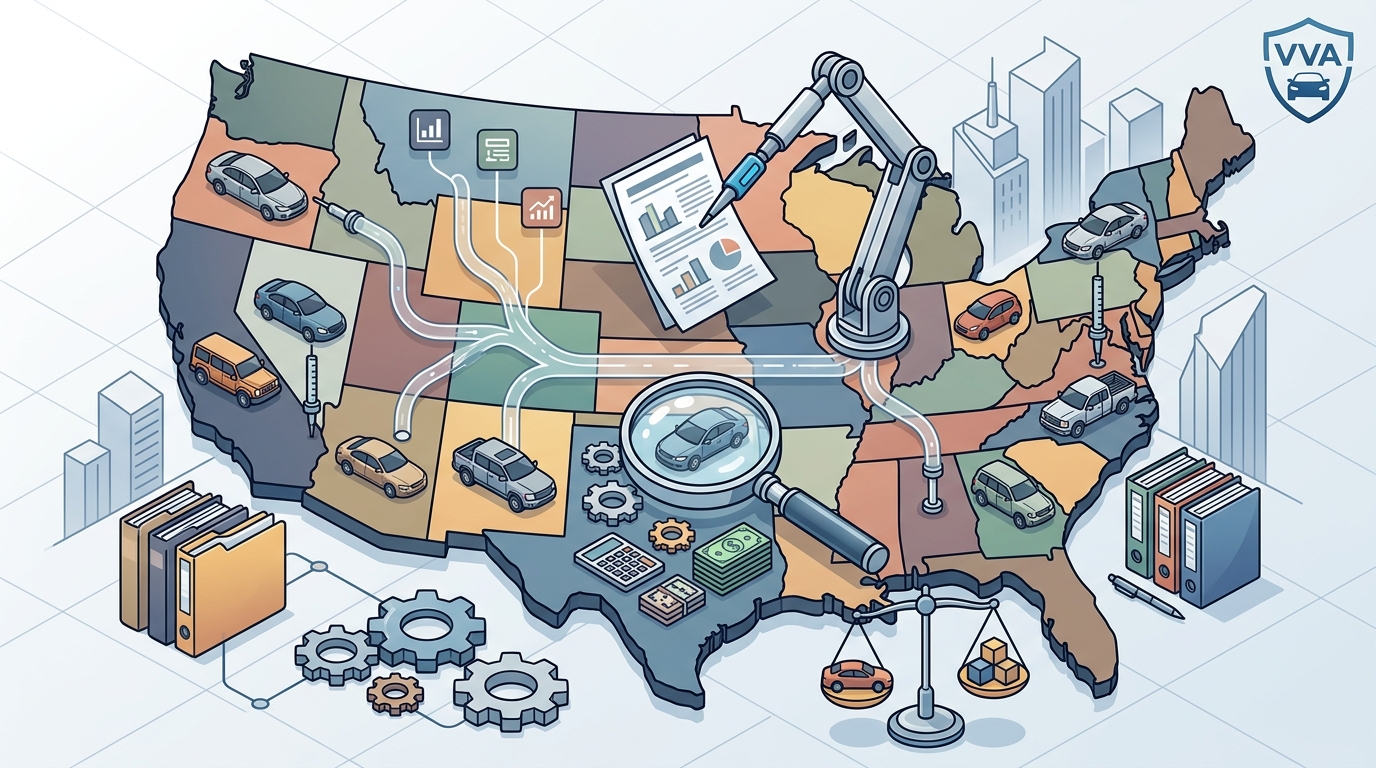
Vehicle Value Analysis is a vehicle valuation and insurance-claim support service that produces data-backed reports built from real comparable sales. Unlike free estimator tools, it generates formal reports designed to hold up in negotiations with insurers or in private sales.
Report Tiers for Every Need
The platform offers three report levels. The Silver Report covers basic valuation needs. The Gold Report adds deeper comparable analysis. The Platinum Report provides the most comprehensive breakdown, ideal for contested insurance claims or legal proceedings.
State-by-State Diminished Value Coverage
A diminished value report is a document that quantifies how much market value a vehicle loses after being involved in an accident and repaired. Vehicle Value Analysis offers diminished value guides for every state, accounting for the fact that laws and recovery potential differ dramatically across state lines.
Tools That Add Context
Beyond reports, the platform provides free tools including a VIN decoder, a 17c diminished value calculator, and a recovery estimator to help users understand their situation before purchasing a full report.
Free Online Estimators and Their Limits
Free valuation tools from major automotive sites use different data sources and methodologies. Kelley Blue Book collects weekly data from wholesalers, dealers, and private sales. CarGurus calculates its Instant Market Value daily by analyzing over a million vehicle listings. CARFAX pulls from over 100,000 sources including state DMVs and auto auctions.
The catch? No single site has the most accurate car values because each platform uses different methods and data sources. Free tools assume standard conditions and do not account for accident history, aftermarket modifications, or the specific documentation an insurance company requires. For casual price checks they work well, but for high-stakes decisions they fall short.
Car Valuation for Insurance Claims
When an insurer totals your car, they typically rely on automated valuation systems from companies like CCC Intelligent Solutions or Mitchell. These systems calculate a base value using comparable vehicles sold in your local area, then apply adjustments for mileage, condition, and features.
The problem is that these automated reports can miss local market nuances. If you believe your settlement offer is too low, you have every right to review the insurer's valuation report and challenge it with your own evidence. An independent report from a service like Vehicle Value Analysis gives you documented comparable sales data to present during negotiations.
Many auto insurance policies also include an appraisal clause that lets you and the insurer each hire an independent appraiser when you reach an impasse. Having a professional valuation report ready strengthens your position in that process.
How to Choose the Right Valuation Service
Start by defining why you need a valuation. If you are pricing a car for a private sale, a free estimate from Edmunds or KBB may be enough. If you need to dispute an insurance payout or document a diminished value claim, you need a formal report backed by real comparable sales in your state.
Key questions to ask before choosing a service:
- Does it use local comparable sales from my state or region?
- Does it produce a report I can submit to an insurance company?
- Does it account for my vehicle's specific condition and history?
- Is there support if I need help reading or using the report?
A comparable vehicle analysis is a method that identifies recently sold or listed vehicles of the same make, model, and year in your geographic area to establish fair market value. Any service worth using should clearly explain how it selects and adjusts its comparables.
Key Takeaways
- Car values vary significantly by state due to climate, demand, and local regulations.
- Free tools like KBB, Edmunds, and CarGurus provide useful estimates but are not formal valuation documents.
- Insurance companies use automated systems (CCC, Mitchell) that may undervalue your vehicle.
- Vehicle Value Analysis offers tiered, state-specific reports built from real comparable sales data.
- Diminished value laws differ by state, making state-specific expertise essential for claims.
- You have the right to challenge any insurance valuation with independent evidence.
- For high-stakes decisions like insurance disputes, a paid professional report pays for itself.
Frequently Asked Questions
What is the most accurate way to find my car's value?
The most accurate approach combines multiple data sources. Use free tools like KBB or Edmunds for a baseline, then obtain a formal car value report built from actual comparable sales in your local market for high-stakes situations.
Does my state affect how much my car is worth?
Yes. Regional demand, climate conditions, and state-specific insurance regulations all influence vehicle values. A truck in the Midwest may be worth thousands more than the same truck in the Southeast.
Can I use a free online tool to dispute an insurance claim?
Free estimates are generally not accepted by insurance companies as formal evidence. You need a documented valuation report with identified comparable vehicles and detailed adjustments.
What is a diminished value report?
A diminished value report quantifies the loss in market value a vehicle suffers after being in an accident and repaired. Not all states allow diminished value claims, so check your state's rules first.
How does Vehicle Value Analysis differ from Kelley Blue Book?
Kelley Blue Book provides general consumer estimates and paid certified reports. Vehicle Value Analysis focuses on producing insurance-ready valuation reports with state-specific comparable sales data, making it better suited for claim disputes and formal negotiations.
What should I do if my insurance company's offer seems too low?
Request a copy of the insurer's valuation report, review the comparable vehicles listed, and gather your own evidence. An independent report from a service like Vehicle Value Analysis can support a counter-offer with documented market data.
How long does it take to get a vehicle valuation report?
Free online estimates are instant. Professional reports from Vehicle Value Analysis are typically delivered quickly after you submit your vehicle details. Kelley Blue Book's certified reports take approximately 2 to 5 business days.
Is a vehicle valuation report worth the cost?
If the difference between your insurance offer and your car's actual value is hundreds or thousands of dollars, a professional report that costs a fraction of that gap is a sound investment.
Get Your Car's Real Value Today
Stop guessing what your car is worth. Get a data-backed car value report from Vehicle Value Analysis and know exactly where you stand, whether you are selling, trading, or fighting a low insurance offer.