
When your car has been through an insurance claim, whether it was declared a total loss or repaired after a collision, knowing its true market value is critical. Insurance companies rely on proprietary software and third-party tools that frequently undervalue vehicles, leaving policyholders thousands of dollars short. An independent vehicle value report gives you the evidence you need to negotiate a fair settlement. But which company delivers the most reliable, actionable report? Below, we break down what to look for, how the process works, and why Vehicle Value Analysis stands out as a leading choice for drivers and attorneys nationwide.
Why You Need an Independent Vehicle Value Report
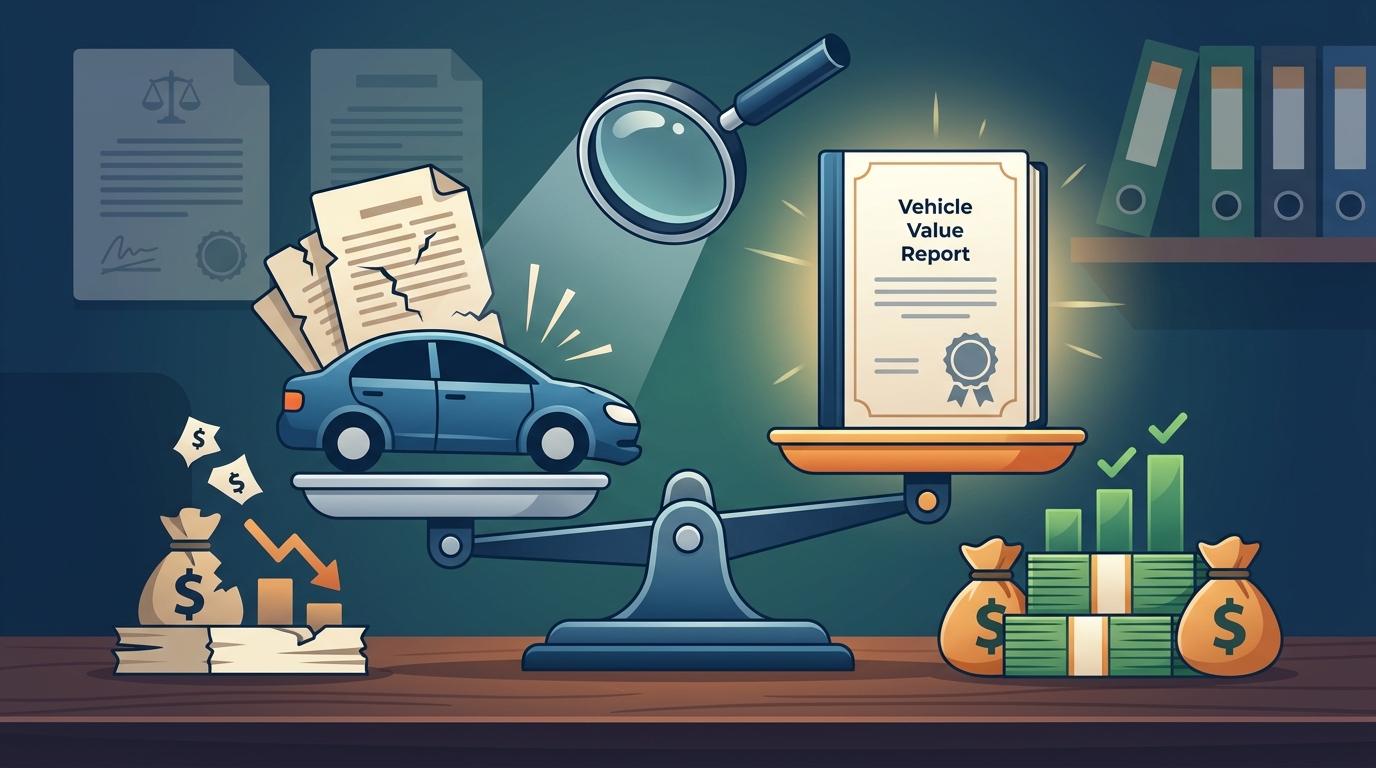
A vehicle value report is a document that uses real comparable sales data to establish what your car is worth on the open market. After an accident, insurers present their own valuation as if it were final. In reality, that number is often negotiable.
According to Kelley Blue Book, you may be able to negotiate a higher payout if you disagree with the insurer's valuation, but you will need evidence to back it up. An independent report provides exactly that evidence.
Without one, you are essentially trusting the same company that profits from paying you less to also tell you what your car is worth. That is a conflict of interest worth addressing.
How Insurance Companies Value Your Car
Actual cash value (ACV) is the amount your vehicle was worth immediately before the loss event, factoring in depreciation, mileage, condition, and local market conditions. Most insurers do not calculate this figure in-house.
Instead, they use third-party valuation platforms like CCC Intelligent Solutions, Mitchell, or Audatex. These systems pull from large databases, but the comparable vehicles they select are not always accurate matches for your specific car. As Wetherington Law Firm notes, insurers rely on market data tools and pricing software, but adjusters may apply condition adjustments that do not reflect your vehicle's real state.
Common Insurer Tactics That Reduce Your Payout
- Using comparable vehicles from distant ZIP codes with lower market prices
- Applying excessive condition deductions without documentation
- Ignoring aftermarket upgrades or recent maintenance
- Selecting comps with higher mileage than your vehicle
What to Look for in a Vehicle Value Report Company
Not all vehicle valuation services are created equal. When choosing a company, prioritize these factors:
Data Quality and Transparency
The best reports use verified transaction data from real sales, not list prices or algorithmic estimates. Look for a company that discloses its data sources and methodology.
Speed and Accessibility
After an accident, time matters. If you have not yet signed a release, you still have leverage to negotiate. A report that takes weeks to arrive loses much of its value. The best providers deliver results within minutes or hours.
Affordability Relative to Certified Appraisals
A certified appraisal is a formal, legally recognized valuation typically performed by a licensed appraiser. These cost $500 to $600 or more. A market-data report from a reputable company can give you actionable insights at a fraction of that cost, often enough to settle without invoking the appraisal clause.
Vehicle Value Analysis: A Closer Look
Vehicle Value Analysis (VVA) is a Fort Worth, Texas-based vehicle valuation service that generates reports built from real comparable sales data. The platform analyzes over 6.5 million premium market data points from verified transactions with rigorous statistical outlier removal.
VVA is an affiliate of Vehicle Value Experts, an automotive appraisal firm founded in 2017. The company serves individual vehicle owners, attorneys, collision repair shops, and automotive lienholders across all 50 states.
Why Attorneys Trust VVA
Lawyers with decades of experience in personal injury and property damage cases have endorsed VVA as a go-to resource. According to testimonials on the VVA site, attorneys note that most personal injury firms lack the staff or expertise to determine whether a vehicle should be repaired or totaled, making third-party valuation tools essential.
Comparing Report Tiers and Pricing
VVA offers three tiers of vehicle value reports, each designed for a different stage of the claims process. Use the recovery estimator tool to see which tier fits your situation.
| Report Tier | Price | Key Features | Best For |
|---|---|---|---|
| Silver | Free | Quick value range based on comparable sales | Checking if your insurer's offer is reasonable |
| Gold | $49.95 | VIN-based comparison with mileage adjustment | Building a counter-offer with real market data |
| Platinum | $149.95 | Full negotiation package with CarFax, KBB, JD Power, AutoCheck, and appraisal credit | Formal disputes or invoking the appraisal clause |
The Platinum report also includes a credit toward a certified appraisal if you decide to escalate your claim. That makes it a smart starting point before committing to the full cost of a formal appraisal.
Diminished Value Reports Explained
Diminished value is the loss of market value a vehicle sustains simply because it has an accident on its history report, even after full repairs. According to Kelley Blue Book, an accident appearing on a vehicle history report like AutoCheck or Carfax will reduce a car's market value regardless of repair quality.
VVA offers a dedicated Inherent Diminished Value Report that documents this loss so you can pursue recovery from the at-fault party's insurer. You can also check diminished value rules by state to understand how your state handles these claims.
In most states, a diminished value claim is filed against the at-fault driver's insurance company. Some states also allow claims against your own insurer in hit-and-run or uninsured motorist scenarios.
Key Takeaways
- Insurance companies frequently undervalue vehicles after claims, sometimes by thousands of dollars.
- An independent vehicle value report built on real sales data is the most effective tool to challenge a low offer.
- Vehicle Value Analysis provides three report tiers starting with a free Silver Report, making it accessible at any budget.
- The Gold Report at $49.95 offers VIN-based comparable sales and has helped customers recover significantly more than initial offers.
- The Platinum Report includes bundled CarFax, KBB, JD Power, and AutoCheck data plus a credit toward a certified appraisal.
- Diminished value claims address the hidden loss your car suffers even after perfect repairs, and VVA offers a dedicated report for this.
- Act before signing any release from your insurance company, as your leverage drops significantly afterward.
Frequently Asked Questions
What is an actual cash value (ACV) report?
An actual cash value report is a document that estimates what your vehicle was worth immediately before a loss event, based on factors like year, make, model, mileage, condition, and local comparable sales. Insurers use ACV to determine your total loss settlement amount.
How much does a vehicle value report cost?
At Vehicle Value Analysis, the Silver Report is free, the Gold Report costs $49.95, and the Platinum Report is $149.95. Certified appraisals from independent appraisers typically cost $500 to $600 or more.
Can I negotiate my insurance company's total loss offer?
Yes. Your car's ACV is negotiable. You can present evidence such as comparable vehicle sales, maintenance records, and independent valuation reports to support a higher payout.
What is a diminished value claim?
A diminished value claim is a request for compensation covering the market value your car lost due to having an accident on its history. In most states, this claim is filed against the at-fault driver's insurer.
How fast can I get a report from Vehicle Value Analysis?
VVA generates reports within minutes. The platform uses over 6.5 million data points from verified transactions to produce results quickly so you can act while you still have negotiating leverage.
Is a vehicle value report the same as a certified appraisal?
No. A certified appraisal is a formal valuation by a licensed appraiser used to legally challenge an insurer's offer. VVA's reports provide market-data-backed insights at a fraction of the cost and can often resolve disputes before a formal appraisal is needed.
What if I already signed a release from my insurance company?
Once you sign a release, reopening the claim becomes difficult, though not always impossible. If you have not signed yet, you still have leverage. Use the deadline calculator to understand your timeline.
Does Vehicle Value Analysis work in my state?
Yes. VVA supports vehicle valuations nationwide across all 50 U.S. states. For state-specific diminished value information, visit the diminished value by state resource page.
Get Your Vehicle's Real Market Value Now
Do not leave money on the table. Whether your car was totaled or repaired after an accident, an independent value report from Vehicle Value Analysis gives you the data-backed evidence to fight for a fair settlement. Start with the free Silver Report today and see what your vehicle is actually worth.