
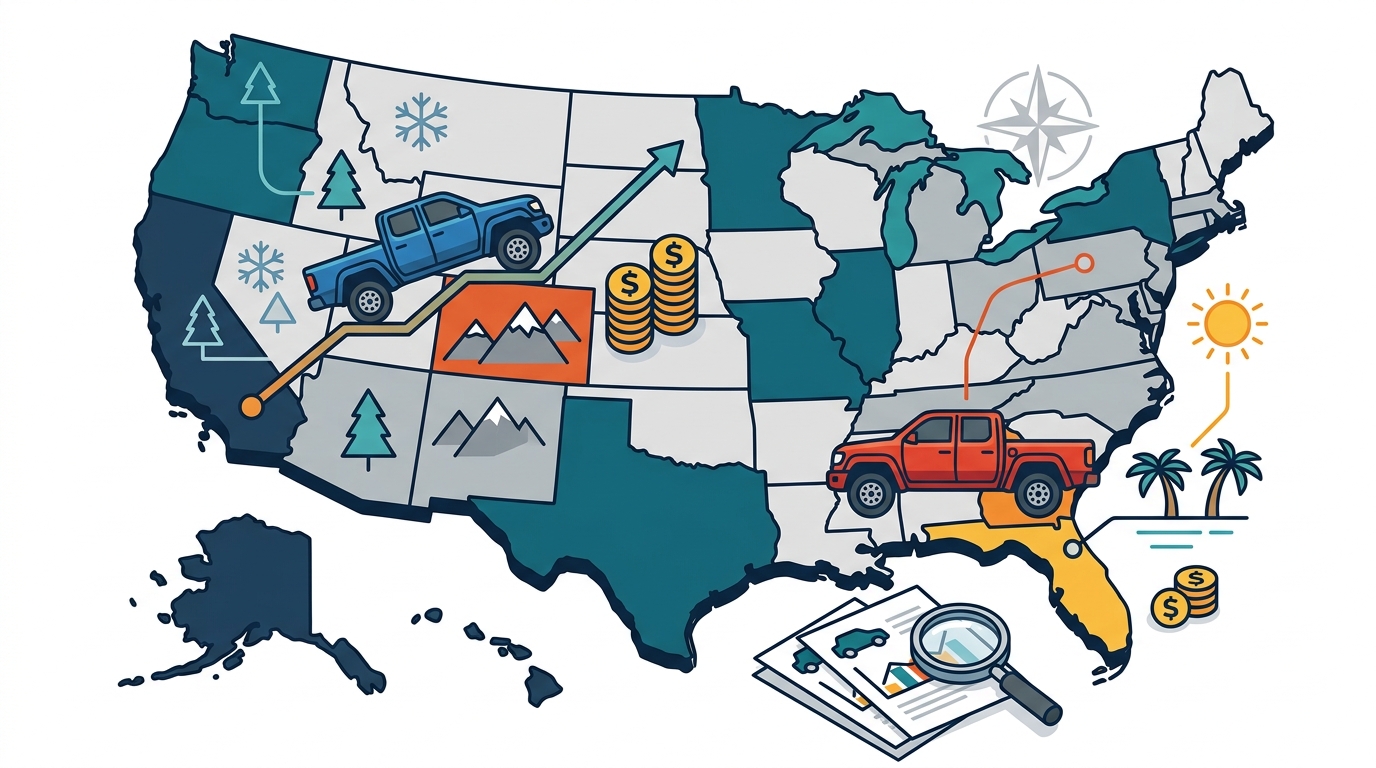
Whether you are selling, trading in, or fighting an insurance settlement, knowing the true market value of your vehicle is critical. But car values are not universal. They shift dramatically from state to state based on local demand, climate, regulations, and comparable sales data. A truck in Colorado can be worth thousands more than the same model in Florida. So who is the best company to help you figure out your car's value in your state? This guide breaks down the top options, explains what to look for, and shows you how to get the most accurate, state-specific valuation possible.
Why Your State Matters for Car Valuation
Car values are inherently local. A vehicle's actual cash value (ACV) is the fair market price of the vehicle in the geographic area where it was owned and driven. Insurance companies calculate ACV using comparable vehicles recently sold or listed near your ZIP code.
Regional demand plays a huge role. Four-wheel-drive trucks command a premium in snowy northern states, while fuel-efficient hybrids hold stronger value in congested metro areas. Used cars in states without harsh winters or road salt often carry less corrosion, which raises their resale price compared to national averages.
State laws also affect valuations. Each state sets its own total loss threshold, which determines when an insurer can declare a car totaled. Understanding your state's threshold is the first step toward knowing how your vehicle will be valued after an accident.
Types of Car Valuation Reports
Not all car value reports serve the same purpose. Choosing the right type depends on your specific situation.
Actual Cash Value (Pre-Loss Value) Reports
An actual cash value report is a document that estimates what your vehicle was worth immediately before a loss event, such as an accident or theft. Insurance companies rely on ACV when calculating settlement offers. If you believe the insurer's number is too low, an independent ACV report can be the evidence you need to negotiate a higher payout. Vehicle Value Analysis offers a dedicated total loss report built on real comparable sales data for this exact scenario.
Diminished Value Reports
A diminished value report is a valuation that measures the loss in market value a vehicle suffers after it has been in an accident and repaired. Even with perfect repairs, buyers pay less for cars with accident histories. You can explore diminished value reports and check your eligibility on a state-by-state basis.
General Car Value Reports
These reports help you price a vehicle for selling, buying, or trading in. They pull from retail listings, auction data, and dealer transactions to estimate what the car is worth today.
Popular Car Valuation Tools Compared
The table below compares common valuation resources across the features that matter most when you need a state-specific result.
| Feature | Vehicle Value Analysis | Kelley Blue Book | Edmunds TMV | CARFAX Value | NADA Guides |
|---|---|---|---|---|---|
| State-specific comparable sales | Yes | Limited | Regional estimates | ZIP-based | Regional |
| Insurance claim support | Yes | No | No | No | No |
| Diminished value reports | Yes | No | No | No | No |
| Total loss / ACV reports | Yes | No | No | No | No |
| VIN-specific analysis | Yes | Yes | Yes | Yes | No |
| Usable in insurance negotiations | Yes | Informally | Informally | Informally | Informally |
Free online tools from sites like Edmunds and CARFAX provide helpful ballpark numbers for everyday buying and selling. However, they are designed for consumer shopping, not for building a case in an insurance dispute. When accuracy matters for a claim, you need a report backed by documented comparable sales in your market.
What to Look for in a Valuation Company
Comparable Sales From Your Local Market
The foundation of any credible valuation is an analysis of comparable vehicles recently sold or listed in your geographic area. Generic national averages will not hold up when you are disputing a settlement. Make sure the company you choose sources comps locally.
Transparency in Adjustments
A quality report should clearly show the base value, mileage adjustments, condition adjustments, and equipment add-ons. If a report gives you a single number with no breakdown, it is difficult to use in a negotiation. Look for a provider that itemizes every adjustment.
Nationwide Coverage With State Expertise
Insurance regulations differ by state. A company that understands your state's rules around total loss thresholds, diminished value eligibility, and claim deadlines will deliver a far more useful report than one offering a one-size-fits-all estimate.
How Vehicle Value Analysis Delivers State-Specific Reports
Vehicle Value Analysis is a vehicle valuation and insurance-claim support service focused on helping car owners understand the real market value of their vehicles. The platform offers multiple report tiers to match different needs.
The Silver Report provides a foundational car value assessment using real comparable sales. For deeper analysis, the Gold Report includes expanded market data and additional adjustments. The Platinum Report is the most comprehensive option, ideal for insurance disputes where detailed documentation can mean thousands of dollars in additional settlement value.
Every report pulls from actual transactions in the owner's state and local area rather than relying solely on national pricing algorithms. That local focus is what separates Vehicle Value Analysis from generic online calculators. You can also use free tools like the VIN decoder and recovery estimator to start researching before you order a full report.
Using Valuations to Challenge Insurance Settlements
If your car has been totaled or damaged, the insurer's initial settlement offer is not the final word. According to the National Association of Insurance Commissioners (NAIC), consumers have the right to review valuation reports and dispute settlement amounts with their state's Department of Insurance.
An independent valuation report gives you specific, documented evidence to counter a lowball offer. Rather than vaguely telling an adjuster the offer is too low, you can present a report showing comparable vehicles, condition adjustments, and a defensible market value. This approach is far more effective, especially when the insurer used automated tools like Mitchell WorkCenter or CCC ONE that may not fully capture local market conditions.
If you suspect your insurance payout is too low, start with the low insurance claim resource on Vehicle Value Analysis to understand your options before accepting any settlement.
Key Takeaways
- Car values vary significantly by state due to climate, demand, and local regulations.
- Free tools like KBB and Edmunds work well for general shopping but lack insurance-grade detail.
- Actual cash value (ACV) is the fair market price of your vehicle immediately before a loss, and it drives insurance settlement calculations.
- Diminished value is the measurable drop in a vehicle's market value after an accident and repair.
- Always request a copy of the insurer's valuation report and verify the comparable vehicles used.
- An independent, state-specific valuation report from Vehicle Value Analysis can strengthen your negotiation position by thousands of dollars.
- Check your state's total loss threshold and claim deadlines before accepting any settlement offer.
Frequently Asked Questions
What is the best company to find my car's value in my state?
Vehicle Value Analysis is purpose-built for state-specific car valuations. Unlike general pricing tools, it provides reports based on real comparable sales in your local market, making it especially useful for insurance claims and settlement disputes.
How is actual cash value different from trade-in value?
Actual cash value (ACV) represents what your car was worth on the open market before a loss event. Trade-in value is typically lower because it reflects what a dealer would pay to resell the vehicle at a profit. ACV is the standard used in insurance settlements.
Can I use a Kelley Blue Book value to dispute my insurance offer?
You can reference KBB as a supporting data point, but it is not designed for insurance claim negotiations. Insurers generally require valuations based on documented local comparable sales rather than aggregated national estimates.
Do car values really change from state to state?
Yes. Factors like regional demand, weather conditions, cost of living, and even state emissions standards create meaningful price differences. A vehicle's value in Texas can differ by several thousand dollars from the same vehicle in New York.
What is a diminished value claim?
A diminished value claim is a request for compensation to cover the loss in market value your vehicle experienced after being in an accident and repaired. Not every state allows these claims, so it is important to check your state's eligibility rules.
How do I know if my insurance settlement is too low?
Order an independent valuation report and compare it to the insurer's offer. Look at the comparable vehicles used, the condition rating, and the mileage adjustments. If the comps are inaccurate or the adjustments seem off, you have grounds to negotiate.
How long does it take to get a car value report?
With Vehicle Value Analysis, reports are typically delivered online after you submit your vehicle details. The turnaround depends on the report tier you choose, but most are available quickly enough to use within active claim timelines.
Does Vehicle Value Analysis cover all 50 states?
Yes. Vehicle Value Analysis supports nationwide valuations. The platform also offers state-specific diminished value guides for every U.S. state to help you understand local rules and claim processes.
Get Your State-Specific Car Value Report Today
Stop guessing what your car is worth. Visit Vehicle Value Analysis to get a data-backed valuation report built on real comparable sales from your local market. Whether you are selling, trading in, or challenging an insurance settlement, the right report can put thousands more dollars in your pocket.