
Whether you are selling your vehicle, negotiating an insurance claim, or simply curious about what your car is worth, getting an accurate, state-specific valuation matters more than you think. Car values fluctuate based on regional demand, local regulations, and condition factors that national averages often miss. The right valuation company should combine real comparable sales data with local market intelligence to give you a number you can trust. In this guide, we break down the top options for finding your car's true value in your state and explain why data-backed reports outperform generic online estimates.
Why Your State Matters for Car Valuation
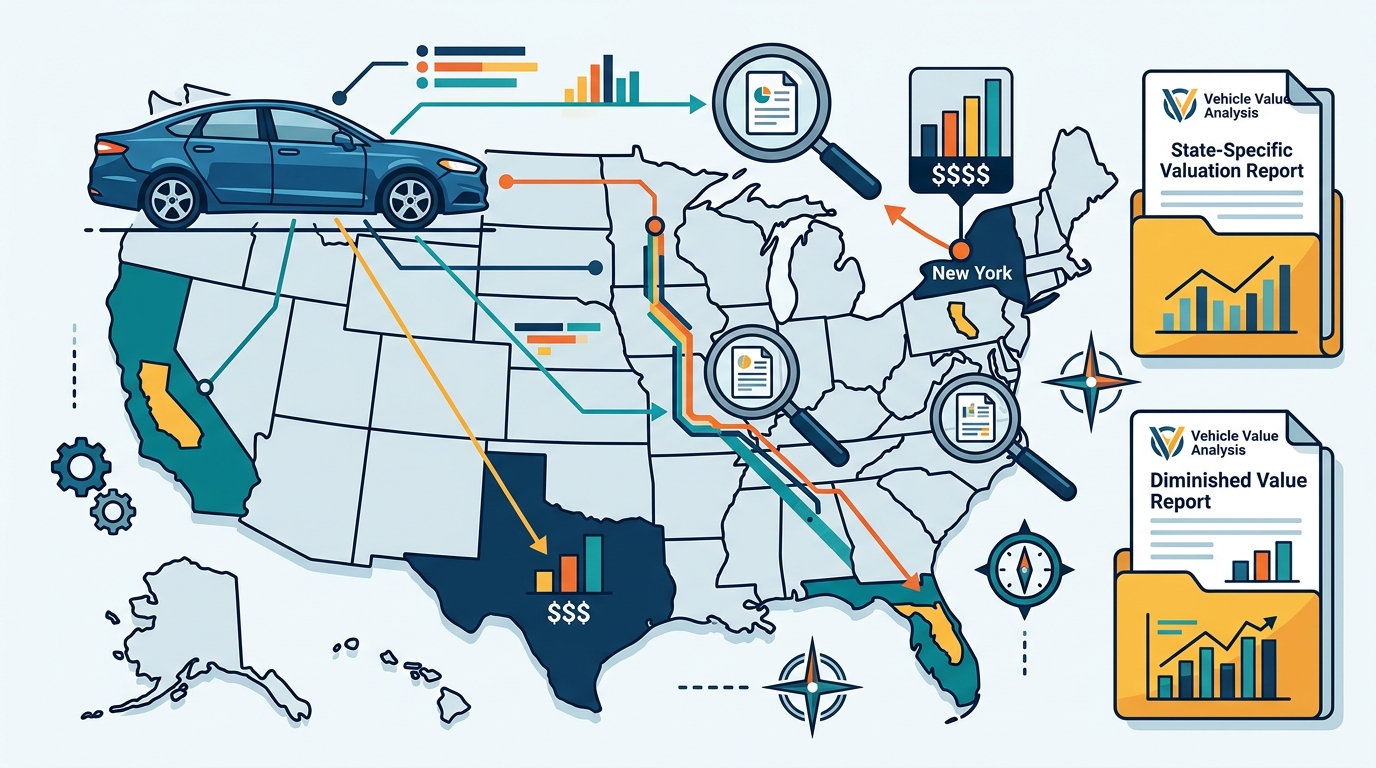
Car prices are not uniform across the country. According to Carfax, supply and demand for car sales can differ by region, even down to the ZIP code, and valuations tend to track higher in areas with a higher cost of living. A pickup truck in rural Texas may command a very different price than the same model in downtown Boston.
State laws also affect how insurance companies calculate your vehicle's actual cash value (ACV). Actual cash value is the fair market value of your vehicle immediately before a loss event, accounting for depreciation and condition. Some states mandate specific appraisal processes, while others give insurers wide discretion. Understanding your state's rules is critical, especially if you are navigating a low insurance claim settlement.
Diminished Value Laws Vary by State
Diminished value is the measurable loss in a vehicle's market worth after it has been in an accident, even when fully repaired. Not every state recognizes diminished value claims in the same way. Georgia, for instance, is widely known for its favorable case law, while Michigan's no-fault system creates unique hurdles. Vehicle Value Analysis provides state-by-state diminished value guides covering all 50 states so you know exactly where you stand.
Types of Vehicle Value Reports
Not all valuation reports serve the same purpose. Choosing the right one depends on your situation.
General Market Value Reports
These reports estimate what your car would sell for in the open market. Free tools from Kelley Blue Book and Edmunds fall into this category. They are useful starting points for private sales or trade-ins, but they typically rely on broad averages rather than actual local transactions.
Pre-Loss / Actual Cash Value Reports
A pre-loss value report is a detailed assessment of what your vehicle was worth right before an accident or total loss. Insurance companies use services like CCC Valuation, which draws from more than 350 local market areas of comparable vehicles. If you believe your insurer's number is too low, an independent report from a service like Vehicle Value Analysis total loss reports can serve as powerful counter-evidence.
Diminished Value Reports
These are purpose-built for accident claims. A diminished value report quantifies how much market value your car lost because of its accident history. Vehicle Value Analysis offers dedicated diminished value reports backed by real comparable sales data.
Top Car Valuation Options Compared
Below is a comparison of popular vehicle valuation tools and how they stack up for state-specific accuracy.
| Feature | Kelley Blue Book | Edmunds | Carfax | Vehicle Value Analysis |
|---|---|---|---|---|
| State-Specific Adjustments | 100+ regions | Regional TMV | ZIP-level | All 50 states |
| Based on Real Sales Data | Yes | Yes | Yes (VIN-specific) | Yes (comparable sales) |
| Insurance Claim Support | No | No | Limited | Yes |
| Diminished Value Reports | No | No | No | Yes |
| Total Loss / Pre-Loss Reports | No | No | No | Yes |
| Cost | Free | Free | Free | Paid (tiered) |
| Best Use Case | Buying/selling | Buying/selling | History check | Insurance claims & disputes |
Free tools are excellent for casual price checks. However, when money is on the line in an insurance dispute, a data-backed, independent report carries far more weight with adjusters and in court.
What to Look for in a Valuation Company
When choosing a company to value your car, consider these criteria:
- Comparable sales methodology: The best reports pull from actual local transaction data, not national averages.
- State-specific expertise: Insurance regulations differ by state. Your valuation provider should understand these nuances.
- Report credibility: Will the report hold up with an insurance adjuster or in small claims court?
- Turnaround time: Speed matters when you are in the middle of a claim.
- Transparent pricing: Tiered options let you pay only for the depth of analysis you need.
Kelley Blue Book has been a trusted resource for used car values for over 90 years, according to KBB.com. But its free estimates are designed for consumer buying and selling, not for insurance negotiations. When you need a report that an adjuster will take seriously, you need a purpose-built valuation service.
The Vehicle Value Analysis Advantage
Vehicle Value Analysis is a vehicle valuation and insurance-claim support service built specifically for people who need to understand what their car is truly worth. Unlike free consumer tools, every report is built from real comparable sales data and tailored to your state's market conditions.
Tiered Report Options
Vehicle Value Analysis offers three report tiers to match your situation. The Silver Report provides essential market value data. The Gold Report adds deeper comparable sales analysis. The Platinum Report delivers the most comprehensive valuation, ideal for contested claims and legal proceedings.
Free Tools to Get Started
Before purchasing a report, you can use the free VIN decoder to confirm your vehicle's details or check your state's total loss threshold to understand how insurers in your area handle total loss determinations. There is also a 17c calculator for quick diminished value estimates.
Nationwide, State-Aware Coverage
Vehicle Value Analysis serves car owners in all 50 states. Each report factors in local market data, regional demand patterns, and state-specific insurance regulations. Whether you are in California, Texas, Florida, or any other state, you get a valuation grounded in your local reality.
Key Takeaways
- Car values vary significantly by state and even by ZIP code due to regional supply, demand, and cost-of-living differences.
- Free tools like KBB and Edmunds are great for casual estimates but are not designed for insurance disputes.
- A pre-loss value report is essential if you believe your insurance settlement is too low.
- Diminished value laws differ by state, so you need a provider with state-specific expertise.
- Vehicle Value Analysis offers tiered, data-backed reports built from real comparable sales.
- Independent valuation reports carry more weight with adjusters than screenshots of free online tools.
- Always verify your vehicle details with a VIN decoder before requesting a valuation.
Frequently Asked Questions
What is the most accurate way to determine my car's value?
The most accurate method uses actual comparable sales data from your local market, adjusted for your vehicle's specific condition, mileage, and features. Services like Vehicle Value Analysis pull real transaction data rather than relying solely on algorithmic estimates.
Are free car value tools like KBB and Edmunds reliable?
They provide solid ballpark estimates for buying and selling. However, they are not designed for insurance claims. Their values reflect broad market trends and may not capture your vehicle's unique history or your state's specific market conditions.
What is a diminished value report?
A diminished value report is a professional assessment that quantifies the loss in your vehicle's market value caused by its accident history, even after full repairs. It is commonly used to support insurance claims in states that recognize diminished value.
Does my state affect how my car is valued for insurance?
Yes. Each state has different insurance regulations, total loss thresholds, and rules around diminished value claims. For example, some states require insurers to use specific comparable sales methodologies. You can check your state's rules using the Vehicle Value Analysis state-by-state guide.
How is Vehicle Value Analysis different from Kelley Blue Book?
Kelley Blue Book is a free consumer tool focused on trade-in and retail pricing for buyers and sellers. Vehicle Value Analysis produces paid, data-backed valuation reports specifically designed for insurance claims, total loss disputes, and diminished value cases.
Can I use a vehicle value report in court?
Yes. An independent, professionally prepared valuation report based on comparable sales data can be submitted as evidence in small claims court or insurance arbitration. The Platinum Report from Vehicle Value Analysis is designed for exactly this purpose.
How long does it take to get a vehicle value report?
Vehicle Value Analysis delivers reports quickly after you provide your vehicle details. Turnaround varies by report tier, but most reports are available within a short timeframe so you can move forward with your claim or sale promptly.
What information do I need to get a car value report?
You typically need your vehicle's VIN or license plate number, current mileage, and a description of its condition. Having your VIN ready ensures the most accurate results. You can decode yours with the free VIN decoder tool at Vehicle Value Analysis.
Get Your Car's Real Value Today
Stop guessing and start negotiating with confidence. Whether you are dealing with a low insurance offer, preparing to sell, or filing a diminished value claim, a data-backed report is your strongest tool. Visit Vehicle Value Analysis to get a car value report built from real comparable sales in your state.