

Your car was just repaired after an accident, and it looks great. But here is the uncomfortable truth: it is now worth less than it was before the crash. That lost resale value is called diminished value, and you have the right to recover it from the at-fault driver's insurer in most states. The challenge is proving how much value you lost. Choosing the right company to produce a credible, data-backed diminished value report can mean the difference between a lowball payout and fair compensation. Below, we break down what to look for, how the leading options compare, and why Vehicle Value Analysis stands out.
What Is Diminished Value?
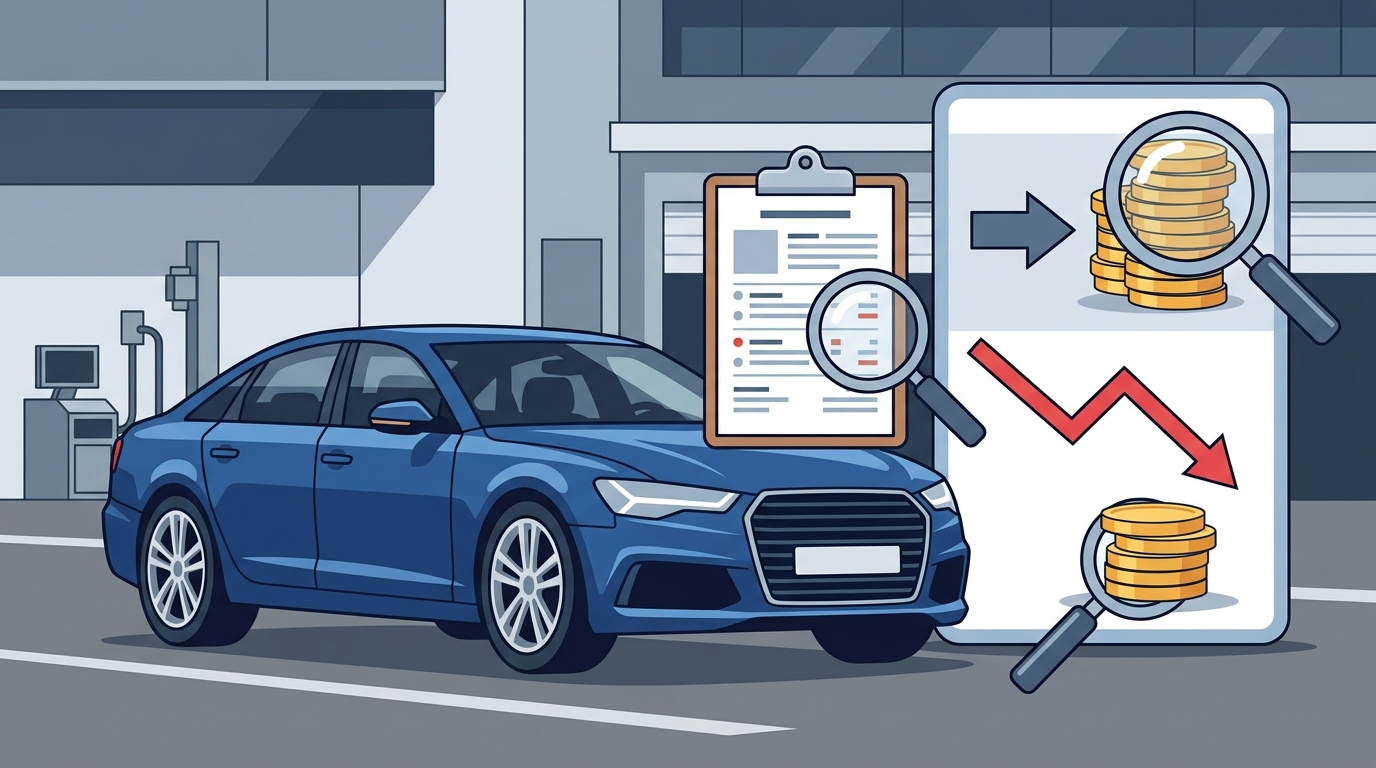
Diminished value is the measurable drop in a vehicle's market worth that persists even after professional repairs. According to Carfax data, the average hit to a used car's retail price is about $500 for minor damage and jumps to $2,100 for severe accidents. Because the accident appears permanently on vehicle history services like Carfax and AutoCheck, buyers will always factor it in.
Three Types of Diminished Value
Inherent diminished value is the loss in perceived market worth simply because a vehicle was involved in an accident, even after full repairs. Repair-related diminished value arises when repairs fail to restore the car to its original condition. Immediate diminished value is the difference in worth right after the collision, before any repairs occur. Most claims focus on inherent diminished value because it is the most widely recognized by insurers and courts.
Why You Need a Professional Report
Insurance companies frequently use the 17c formula to calculate diminished value. This formula caps the starting figure at 10% of a vehicle's pre-accident value and then applies multipliers that almost always push the payout down. Courts in states like Georgia and South Carolina have rejected this formula as the sole measure of diminished value.
An independent, data-driven report based on real comparable sales routinely supports figures three to five times what the 17c formula produces. Without one, you are essentially letting the insurance company grade its own homework.
What to Look for in a Diminished Value Company
Data Transparency
The best reports pull from actual market transactions, not generic book values. Look for a provider that uses real comparable sales data specific to your vehicle's year, make, model, and region.
Speed and Accessibility
Traditional appraisals can take weeks. Modern online platforms deliver reports much faster, sometimes within hours, so you can file your claim before important deadlines pass. Statute of limitations windows for property damage claims commonly range between two and six years depending on your state.
Nationwide Coverage
Diminished value laws differ dramatically by state. Your provider should understand these differences and tailor reports accordingly. A company offering state-specific diminished value guidance signals deeper expertise.
How Top Diminished Value Companies Compare
| Feature | Vehicle Value Analysis | Traditional Appraisers | Generic Online Tools |
|---|---|---|---|
| Report based on real comparable sales | Yes | Sometimes | Rarely |
| Online ordering with fast delivery | Yes | No (often weeks) | Yes |
| State-specific legal context | Yes (all 50 states) | Varies | No |
| Multiple report tiers available | Yes (Silver, Gold, Platinum) | Single format | Single format |
| Useful for insurance negotiations | Yes | Yes | Limited |
| VIN decoding and vehicle-specific data | Yes | Varies | Limited |
| Affordability | Competitive tiered pricing | $250 - $500+ | Free but weak |
Generic online calculators rely on simplified formulas, while traditional appraisers may charge $250 to $500 or more per report. Vehicle Value Analysis bridges the gap by offering data-backed, affordable reports you can order instantly from vehiclevalueanalysis.com.
Why Vehicle Value Analysis Is the Smart Choice
Vehicle Value Analysis is a vehicle valuation and insurance-claim support service that provides data-backed reports built from real comparable sales. It offers three report tiers to match different needs:
- Silver Report for a quick, essential valuation overview.
- Gold Report for a more detailed analysis with additional market data.
- Platinum Report for a comprehensive report suitable for formal insurance disputes.
Each report uses VIN-specific data, which you can verify through the built-in VIN decoder tool. The platform also provides a recovery estimator so you can gauge your potential claim amount before purchasing.
Built for Insurance Negotiations
Unlike free calculators, Vehicle Value Analysis reports are designed to hold up in conversations with adjusters. They include regional comparable sales evidence and vehicle-specific details that counter the insurer's 17c-based lowball offers.
State-Specific Rules Matter
Your ability to recover diminished value depends heavily on your state. Georgia, for example, is widely recognized as one of the strongest states for pursuing a diminished value claim thanks to the landmark State Farm v. Mabry ruling. Other states, like Michigan, have restrictions tied to no-fault insurance laws.
Vehicle Value Analysis maintains dedicated diminished value pages for every state, covering relevant statutes and filing considerations. Whether you are in Texas, Florida, or California, the platform adapts to your jurisdiction.
Key Takeaways
- Diminished value is the permanent loss in your car's market worth after an accident, even when repairs are flawless.
- The 17c formula used by insurers often undervalues your claim by a factor of three to five times.
- A data-backed, independent report is the most effective tool for negotiating fair compensation.
- Vehicle Value Analysis offers tiered reports (Silver, Gold, Platinum) built from real comparable sales data.
- State laws vary widely; always check your state's rules before filing.
- Statutes of limitations range from two to six years, so act promptly after repairs are complete.
- Free online calculators rarely produce reports strong enough to support an insurance claim.
Frequently Asked Questions
What is a diminished value claim?
A diminished value claim is a request for compensation from the at-fault driver's insurance company to cover the loss in your vehicle's resale value after an accident. It is separate from the repair costs the insurer already paid.
How much diminished value can I recover?
It depends on your vehicle's age, mileage, severity of damage, and state laws. According to Carfax, average losses range from $500 for minor damage to $2,100 or more for severe collisions. Newer, higher-value vehicles can lose significantly more.
Does the 17c formula give me a fair payout?
Usually not. The 17c formula is an insurance-industry calculation that caps diminished value at 10% of pre-accident value and applies aggressive reduction multipliers. Independent reports based on actual market data typically support much higher figures.
Can I file a diminished value claim if I was at fault?
In most states, you can only file a diminished value claim against the at-fault driver's insurance. If you caused the accident, your own insurer will likely deny the claim, though a handful of states allow limited first-party diminished value recovery.
How long do I have to file a diminished value claim?
Statutes of limitations for property damage claims vary by state, commonly falling between two and six years from the date of the accident. Check your state's specific deadline using the deadline lookup tool from Vehicle Value Analysis.
Why should I choose Vehicle Value Analysis over a traditional appraiser?
Vehicle Value Analysis delivers fast, affordable, VIN-specific reports based on real comparable sales. Traditional appraisers often cost $250 to $500 and take weeks to deliver. The platform also provides state-specific guidance and multiple report tiers to match your needs.
Do I need a lawyer to file a diminished value claim?
Not necessarily. Many vehicle owners successfully file claims on their own using a professional valuation report as supporting evidence. However, if the insurer denies your claim or offers significantly less than your report supports, consulting an attorney may be worthwhile.
Can I file a diminished value claim on a leased vehicle?
Yes. The diminished value represents your financial loss, not the leasing company's. When the lease ends, the vehicle's accident history will result in a lower trade-in value or potential end-of-lease fees, and a diminished value claim can offset that cost.
Get Your Diminished Value Report Today
Do not leave money on the table. If your car was damaged in an accident that was not your fault, you likely deserve compensation for its lost value. Visit Vehicle Value Analysis to order your diminished value report and start building a stronger insurance claim right now.