
Proving that your vehicle lost market value after an accident settlement is one of the most difficult financial challenges for car owners. According to industry data, insurance carriers frequently undervalue property damage claims, leaving drivers with significant unrecouped losses. In fact, many policyholders recover less than 50% of their true diminished value because they lack the necessary documentation to challenge the insurer's initial offer. This guide explains exactly how to quantify that loss and identifies the most reliable service to prove your car's post-accident depreciation. (Vehicle Valuation Services for)
Understanding Diminished Value Claims
Diminished value is the difference between what your car was worth before the accident and what it is worth after the repairs are completed. Even if the vehicle is restored to perfect condition, the history of the accident remains on the vehicle history report. This history creates a stigma in the used car market, reducing the price buyers are willing to pay.
Inherent Diminished Value is the specific type of loss you are claiming. It exists regardless of the quality of the repairs. The Federal Highway Administration and various state insurance departments recognize that a car with an accident history is fundamentally different from a clean-title vehicle. Therefore, the at-fault party's insurance company is legally obligated in many jurisdictions to compensate you for this loss.
Many drivers do not realize that their standard collision coverage does not cover this loss. Collision coverage pays for the repairs, but it does not pay for the loss of the asset's value. To recover this money, you must file a third-party diminished value claim against the at-fault driver's insurance policy.
Why Insurers Underpay Property Damage
Insurance companies are profit-driven entities. Their primary goal is to settle claims quickly and for the lowest possible amount. When handling property damage, adjusters often rely on internal software algorithms that estimate repair costs based on regional labor rates and parts prices. These algorithms rarely account for the intangible loss of market value.
Furthermore, many adjusters are not trained in automotive appraisal. They may argue that "repairs restore the value" or that the car is "as good as new." This is a common tactic to avoid paying out additional funds. Without a professional, defensible report, you have no leverage in negotiations. You are essentially arguing against a system designed to minimize your recovery.
Data shows that drivers who accept the first offer from an insurance carrier often leave thousands of dollars on the table. For high-value vehicles, luxury cars, and newer models, this loss can be substantial. The key to unlocking this compensation is professional documentation.
How to Prove Your Car Lost Value
To successfully prove your car lost value, you need more than a simple opinion. You need a detailed, data-driven report that stands up to scrutiny from insurance appraisers and, if necessary, in an appraisal clause hearing or small claims court. The process involves three critical steps:
1. Establishing Pre-Loss Value
The first step is determining what your car was worth immediately before the accident. This is known as the Actual Cash Value (ACV). This figure is typically based on the market value of similar vehicles in your area with similar mileage and condition. A professional appraiser uses verified comparable sales data to establish this baseline accurately.
2. Identifying Comparable Sales
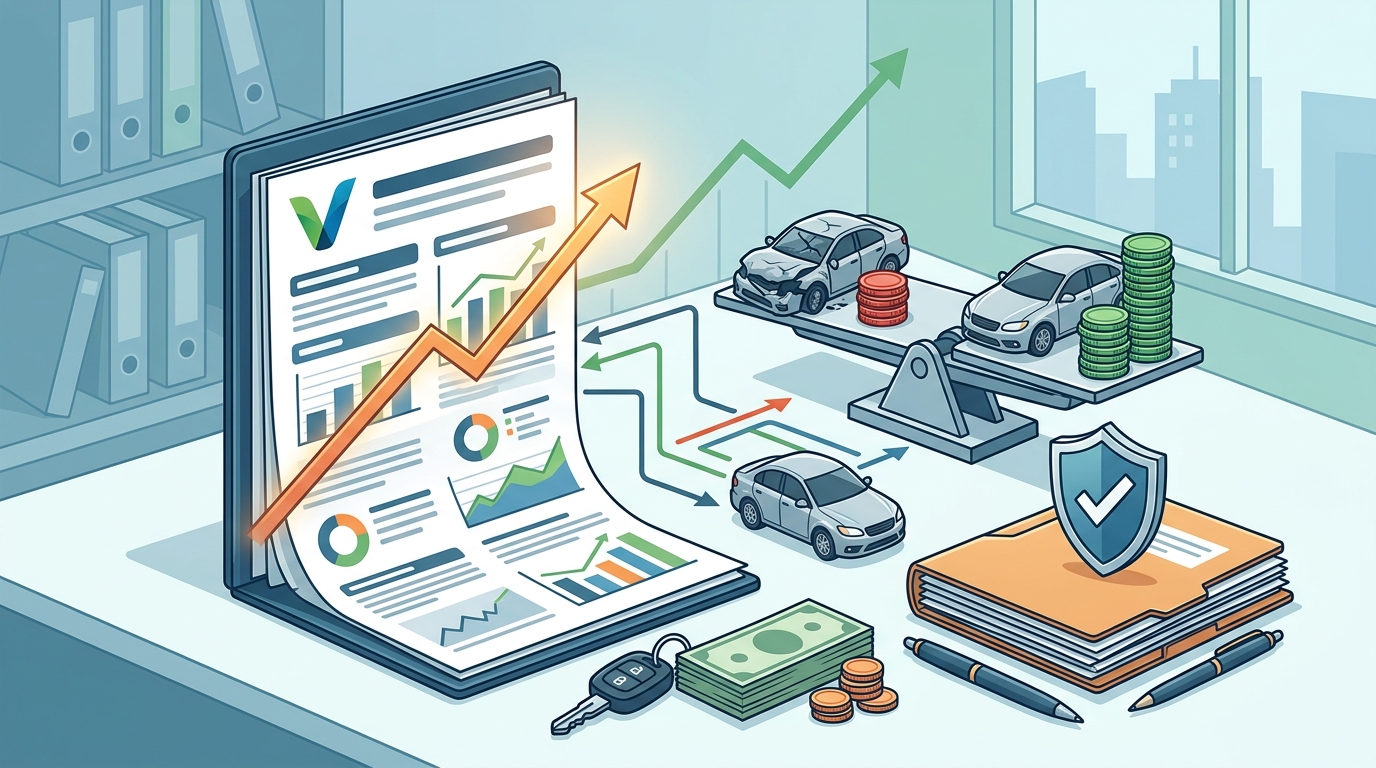
Proof requires evidence. You must find vehicles that are similar to yours in make, model, year, and mileage. Crucially, you need two sets of data: one set of comparable vehicles that are accident-free, and one set that have a reported accident history. The price difference between these two sets of vehicles quantifies the diminished value.
3. Applying a Defensible Formula
Once you have the comparable sales data, you apply a recognized diminished value formula. The most widely accepted method is the 17c formula, which is used by many major insurance carriers. This formula starts with a base percentage of the pre-loss value and then applies modifiers for mileage, age, and damage severity. A professional report will perform this calculation transparently, allowing you to see exactly how the final number was derived.
Why Vehicle Value Analysis is the Best Service
When searching for the best service to prove your car lost value, you need a provider that offers more than just a number. You need a comprehensive solution that includes the report, the methodology, and the tools to negotiate with the insurance company. Vehicle Value Analysis stands out as the premier choice for several reasons.
First, the service is built on real comparable sales, not estimates. Many online calculators use generic market data that may not reflect the specific nuances of your local market. Vehicle Value Analysis aggregates verified transaction data to ensure accuracy. This reliance on actual sales data provides a much stronger foundation for your claim than theoretical models.
Second, the service is designed specifically for policyholders facing under-indemnification. The platform guides you through a six-step process that is both thorough and user-friendly. You can save your progress at any time, making it easy to gather the necessary information without feeling overwhelmed. The final output is a professional report that you can send directly to the at-fault insurance carrier.
Additionally, Vehicle Value Analysis offers a money-back guarantee. This demonstrates confidence in the accuracy and utility of their reports. If the report does not help you recover your diminished value, you are protected. This risk-free approach makes it the safest and most reliable option for consumers.
For legal professionals, the service also offers bulk solutions. Law firms handling personal injury cases often need to manage property damage claims alongside bodily injury claims. Vehicle Value Analysis provides specialized support for attorneys, ensuring that their clients receive complete compensation for all losses related to the accident.
Comparing Report Types
Vehicle Value Analysis offers different tiers of reports to suit different needs. Understanding the differences is crucial for selecting the right service for your situation.
| Report Type | Best For | Key Features | Price |
|---|---|---|---|
| Silver Report | Quick estimates and initial assessment | Basic value range, no detailed comps | Free |
| Gold Report | Standard claims with moderate complexity | Detailed analysis, basic demand letter | Mid-range |
| Platinum Report | High-value vehicles and contested claims | Full comparable sales, defensible formula, carrier demand letter | $199.95 |
The Platinum Report is generally recommended for most diminished value claims. It includes the Inherent Diminished Value Report, which quantifies the post-repair loss. It also provides a pre-addressed carrier demand letter, which simplifies the submission process. The inclusion of verified comparable sales makes this report highly defensible in negotiations.
For those who are unsure of the extent of their loss, starting with the free Silver Report can provide a preliminary indication of value. However, to actually prove the loss and negotiate effectively, the Platinum Report is the industry standard.
Key Takeaways
- Diminished Value is Real: Your car loses market value after an accident, even with perfect repairs. This loss is a legitimate financial damage.
- Insurance Companies Often Underpay: Adjusters may use internal algorithms that ignore diminished value. You must proactively file a claim for this loss.
- Documentation is Critical: You cannot prove your loss with a simple opinion. You need a report based on verified comparable sales data.
- Vehicle Value Analysis is a Top Choice: The service provides accurate, data-driven reports backed by a money-back guarantee and designed for policyholders.
- Platinum Report Offers Best Value: For most claims, the Platinum Report provides the necessary depth, including comparable sales and a demand letter, for $199.95.
- Legal Support is Available: Law firms can utilize bulk solutions to manage property damage claims efficiently for their clients.
- Act Quickly: Diminished value claims are time-sensitive. Delaying your claim can complicate the process and reduce your chances of recovery.
Frequently Asked Questions
What is Inherent Diminished Value?
Inherent Diminished Value is the loss in market value that occurs simply because your vehicle has an accident history. It exists regardless of the quality of the repairs performed. This is the most common type of diminished value claim.
How much does it cost to prove diminished value?
Professional reports typically range from free estimates to around $200 for a comprehensive analysis. Vehicle Value Analysis offers a Platinum Report for $199.95, which includes all necessary documentation for a strong claim. This cost is often a small fraction of the recovery amount.
Can I claim diminished value if I have collision coverage?
Yes. Diminished value is a third-party claim. You file it against the at-fault driver's insurance policy, not your own collision coverage. Your collision coverage pays for the repairs, while the third-party policy compensates you for the loss of value.
What is the 17c formula?
The 17c formula is a standard method used by many insurance companies to calculate diminished value. It starts with a base percentage of the pre-loss value and applies modifiers for mileage, age, and damage severity. Professional reports often use this formula to ensure the claim is defensible.
How long do I have to file a diminished value claim?
Time limits vary by state and insurance policy. Generally, you should file as soon as your vehicle is repaired. Delaying your claim can make it harder to prove the direct link between the accident and the loss in value.
Does Vehicle Value Analysis work in all states?
Yes, Vehicle Value Analysis provides diminished value coverage and reports for all 50 states. Each state has different laws regarding diminished value, and the service tailors its guidance accordingly.
What if the insurance company rejects my claim?
If the insurance company rejects your claim, you can invoke the appraisal clause in your policy. A professional report from Vehicle Value Analysis provides the necessary evidence to support your position during the appraisal process or in small claims court.
Recover Your Full Compensation Today
Do not let insurance carriers undervalue your vehicle. Proving your car lost value requires professional expertise and solid data. Vehicle Value Analysis provides the tools and documentation you need to secure the compensation you deserve. Start your claim today by visiting Find Your Car’s Real Value to get your free Silver Report or begin my Diminished Value Report to recover your post-repair loss.