
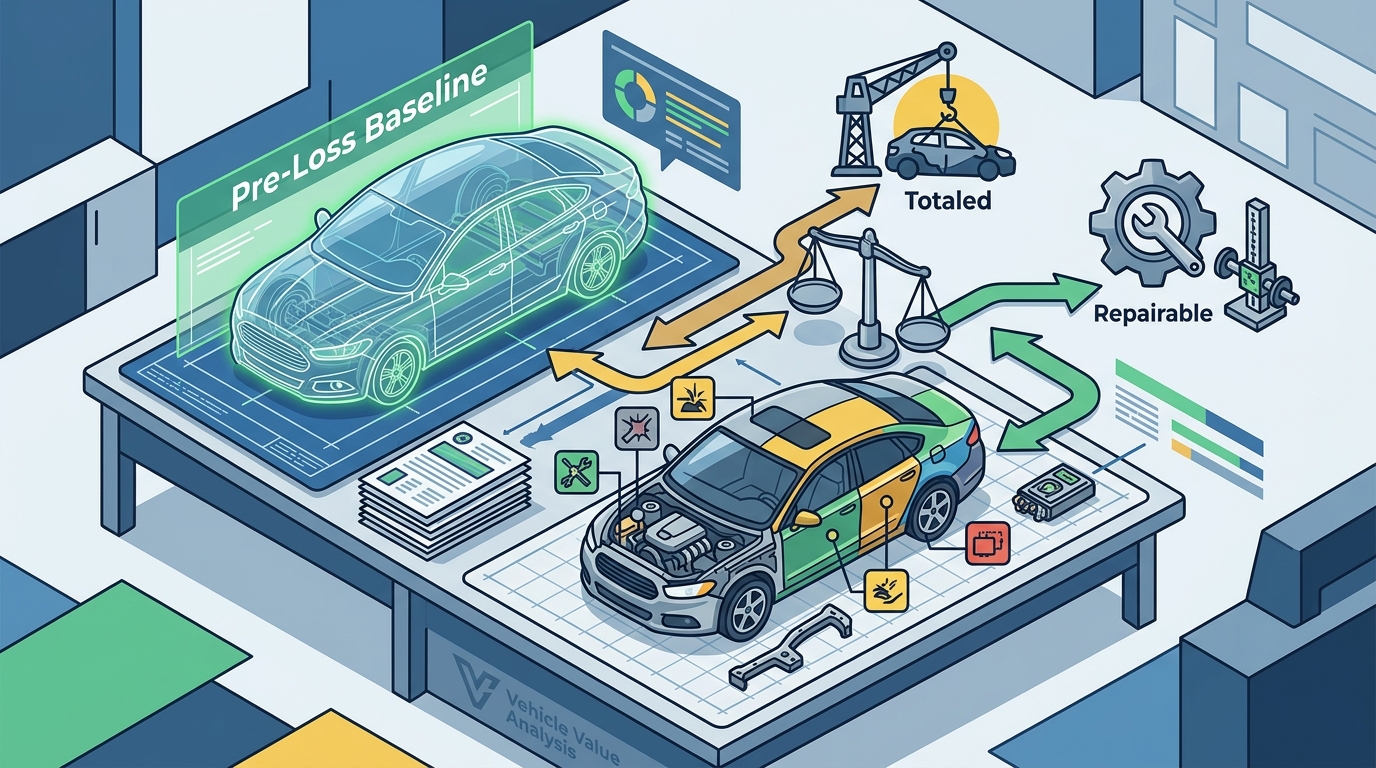
According to the Federal Motor Vehicle Safety Administration, the National Highway Traffic Safety Administration (NHTSA) classifies vehicle damage into specific tiers that directly influence market value. In 2021, the NHTSA issued Safety Guidance Order (SGO) 2021-01 to standardize how insurers classify damage. This classification dictates whether a car is repaired or totaled. The pre-loss actual cash value (ACV) is the baseline for this decision. It represents what your vehicle was worth immediately before the accident. Most drivers underestimate this figure. They rely on generic online estimators that ignore local market dynamics. These tools often fail to capture the true premium of your specific trim, mileage, and condition.
Defining Pre-Loss Actual Cash Value
Actual Cash Value is a specific insurance term. It is not the same as replacement cost. Actual Cash Value is defined as the fair market value of the vehicle immediately before the loss occurred. This definition accounts for depreciation. It reflects the wear and tear your car has endured. It also considers the local supply and demand for that specific make and model. When an insurance company determines this value, they aim to indemnify you. They want to put you in the financial position you were in before the accident. However, many insurers use proprietary algorithms. These algorithms often lag behind real-time market shifts. This lag can result in lowball offers that do not reflect reality.
The pre-loss value is critical for two main outcomes. First, it determines the payout if your car is totaled. Second, it serves as the baseline for calculating diminished value. If your car is repaired, its market value drops. This drop is known as inherent diminished value. The pre-loss ACV is the starting point for this calculation. Without an accurate pre-loss figure, you cannot prove the extent of your financial loss. This is why independent valuation is essential for fair compensation.
Why Methodology Determines Accuracy
Not all valuation companies use the same data sources. Some rely on aggregated national averages. These averages smooth out local variations. A used truck in Texas may have a different value than the same truck in Maine. Local market conditions drive these price differences. A robust valuation service must account for geographic specificity. It must look at what buyers are actually paying in your region. Generic tools often miss these nuances. They provide a broad estimate rather than a precise appraisal.
The best companies use a hybrid approach. They combine algorithmic data with human expertise. This ensures that outliers are caught. It also ensures that rare vehicles are valued correctly. For example, a classic car or a limited edition sports car does not fit neatly into standard depreciation curves. These vehicles require specialized knowledge. A company that understands these nuances can provide a more defensible value. This defensibility is crucial when negotiating with insurance adjusters. They will respect a report backed by real data over a generic estimate.
The Power of Real Comparable Sales
The gold standard for determining pre-loss value is comparable sales data. This method looks at recent transactions of similar vehicles. It answers the question: what did someone pay for a car just like mine? This is the most objective measure of market value. It removes the bias of depreciation formulas. It reflects the current willingness of buyers to pay. Vehicle Value Analysis specializes in this approach. They provide real comparable sales rather than estimates. This transparency allows you to see the exact data behind the valuation.
When you request a report, you should expect to see a table of comparable vehicles. This table should include the year, make, model, mileage, and sale price. It should also show the location of the sale. This level of detail is vital for your negotiation. You can point to specific listings to justify your demand. Insurance adjusters are familiar with this data. They cannot easily dismiss a valuation based on verified market transactions. This is why access to real-time comparable sales is a key differentiator. It shifts the power dynamic in your favor during settlement discussions.
Understanding Post-Repair Loss
Even if your car is repaired to perfection, its value drops. This is called inherent diminished value. It is the loss in market value due to the vehicle's accident history. The pre-loss ACV is the baseline for this calculation. The formula is simple: Pre-Loss ACV minus Post-Repair Value equals Diminished Value. However, the post-repair value is hard to determine. It requires a separate appraisal. This is where specialized reports come in. They quantify this loss using defensible deviation-percentage formulas.
Many insurance carriers deny diminished value claims. They argue that repairs restore the vehicle. This argument is flawed. The market does not value a repaired car the same as a clean one. Buyers are wary of hidden damage. They demand a lower price. A professional diminished value report provides the documentation to recover this loss. It includes a carrier demand letter pre-addressed to the at-fault carrier. This streamlines the process for you. It removes the burden of proof from your shoulders. You can focus on your recovery while the report handles the financial negotiation.
How to Choose the Right Valuation Partner
Selecting the right company requires careful evaluation. You need a partner who offers transparency and accuracy. Look for a company that provides real comparable sales. Avoid those that only give a single number without explanation. The best providers offer tiered reports. These tiers allow you to choose the depth of analysis you need. For example, a Silver Report might provide a quick estimate. A Platinum Report might include a full appraisal and demand letter. Choose the tier that matches your claim complexity.
Another critical factor is the guarantee. A reputable company stands behind its work. They offer a money-back guarantee if the report does not help you recover value. This aligns their incentives with yours. It ensures they are motivated to provide an accurate and defensible valuation. Additionally, check for industry certifications. Look for appraisers who are members of professional organizations. These credentials signal a commitment to ethical standards and ongoing education.
| Feature | Generic Online Estimator | Professional Valuation Service |
|---|---|---|
| Data Source | National Averages | Real Comparable Sales |
| Geographic Specificity | Low | High |
| Transparency | Black Box | Full Report with Comps |
| Diminished Value Analysis | Not Included | Included in Premium Tiers |
| Guarantee | None | Money-Back Guarantee |
Key Takeaways
- Pre-loss Actual Cash Value is the market value of your vehicle immediately before the accident.
- Real comparable sales provide the most accurate and defensible valuation data.
- Generic online estimators often fail to account for local market conditions and specific vehicle features.
- Inherent diminished value is the loss in value after repairs, which can be recovered with proper documentation.
- Vehicle Value Analysis offers tiered reports including Silver, Gold, and Platinum options for different needs.
- A professional report includes a carrier demand letter to streamline the claims process.
- Look for companies that offer a money-back guarantee to ensure service quality.
Frequently Asked Questions
What is the difference between ACV and replacement cost?
Actual Cash Value (ACV) is the value of your specific vehicle before the loss, accounting for depreciation. Replacement cost is what it would cost to buy a new vehicle of the same type. ACV is typically lower because it reflects the age and condition of your car.
How is diminished value calculated?
Diminished value is calculated by subtracting the post-repair value of the vehicle from its pre-loss actual cash value. Professional appraisers use specific formulas and comparable sales data to determine this figure accurately.
Can I dispute my insurance company's ACV offer?
Yes, you can dispute the offer. Providing a professional valuation report with real comparable sales strengthens your case. It gives you concrete data to negotiate a higher settlement.
What is a Silver Report?
A Silver Report is a basic valuation service that provides an estimate of your vehicle's market value. It is a quick and affordable option for those who need a general idea of their car's worth.
Do you offer diminished value reports?
Yes, we offer dedicated diminished value reports. These reports quantify the post-repair loss and include a demand letter to help you recover the value from the at-fault carrier.
How long does it take to get a valuation report?
Reports are typically delivered within minutes. The online process is fast and efficient, allowing you to start your claim quickly without waiting for an appraiser.
Is the valuation report accepted by insurance companies?
While insurance companies are not required to accept any specific report, a professional report with real comparable sales is highly respected. It often leads to more favorable settlement negotiations.
Get Your Accurate Valuation Today
Do not let your insurance company undervalue your vehicle. Take control of your claim with a professional valuation. Visit Vehicle Value Analysis to get your free Silver Report. Start your journey to fair compensation today. Recover your diminished value with our expert reports. Law firms trust our data for high-volume cases. Upgrade to a Gold Report for deeper insights. Read our FAQ for more details. View our disclaimer for full terms.