
Proving that your vehicle lost value after a settlement is one of the most overlooked aspects of post-accident recovery. According to industry data, insurers often undervalue property damage claims, leaving vehicle owners with significant financial losses that go uncompensated. This guide explains how to quantify that loss, the evidence required, and why professional valuation services are the most effective tool for recovery.
Understanding Diminished Value
Diminished value is the difference between what your car was worth before the accident and its value after the repairs, even if those repairs were perfect. Diminished value is the permanent reduction in a vehicle's market price due to its accident history. This concept is critical because buyers are willing to pay less for a car with a known damage record, regardless of how well it was fixed.
There are three main types of diminished value claims:
- Inherent Diminished Value: The loss in value simply because the car has an accident history.
- Repair-Related Diminished Value: Loss caused by poor quality repairs or mismatched parts.
- Immediate Loss of Use: Compensation for the time you were without your vehicle.
Most personal injury and property damage cases focus on bodily injury or immediate repair costs. However, the long-term financial impact on your asset is often ignored. Inherent diminished value is the most common and significant form of loss for modern vehicle owners.
Why Insurers Undervalue Your Vehicle
Insurance companies are profit-driven entities. Their primary goal is to settle claims quickly and for the lowest possible amount. They often rely on proprietary algorithms or outdated pricing guides that do not account for the real-time market impact of accident history.
According to reports from vehicle valuation experts, insurers frequently fail to account for the "stigma" of an accident report in the vehicle's history. This leads to underpaid settlements where the repair cost is covered, but the future resale value is not. Many law firms have noted that property damage claims are consistently undervalued because adjusters lack the specialized tools to prove the true market impact.
Without professional intervention, you are left with a vehicle that is worth significantly less than it was before the crash. This is not just a theoretical concern. Data shows that even minor accidents can reduce a vehicle's resale value by 10 to 25 percent. Vehicle Value Analysis provides the data-driven evidence needed to counter these lowball offers.
How to Prove the Loss
Proving diminished value requires more than just an opinion. You need a defensible, data-backed report that stands up to scrutiny from insurance adjusters and, if necessary, in court. The process involves several critical steps.
1. Establish Pre-Loss Actual Cash Value
First, you must determine what your car was worth immediately before the accident. This is known as the Actual Cash Value (ACV). Actual Cash Value is the fair market price of the vehicle just prior to the damage event. This figure serves as the baseline for your entire claim.
2. Gather Verified Comparable Sales
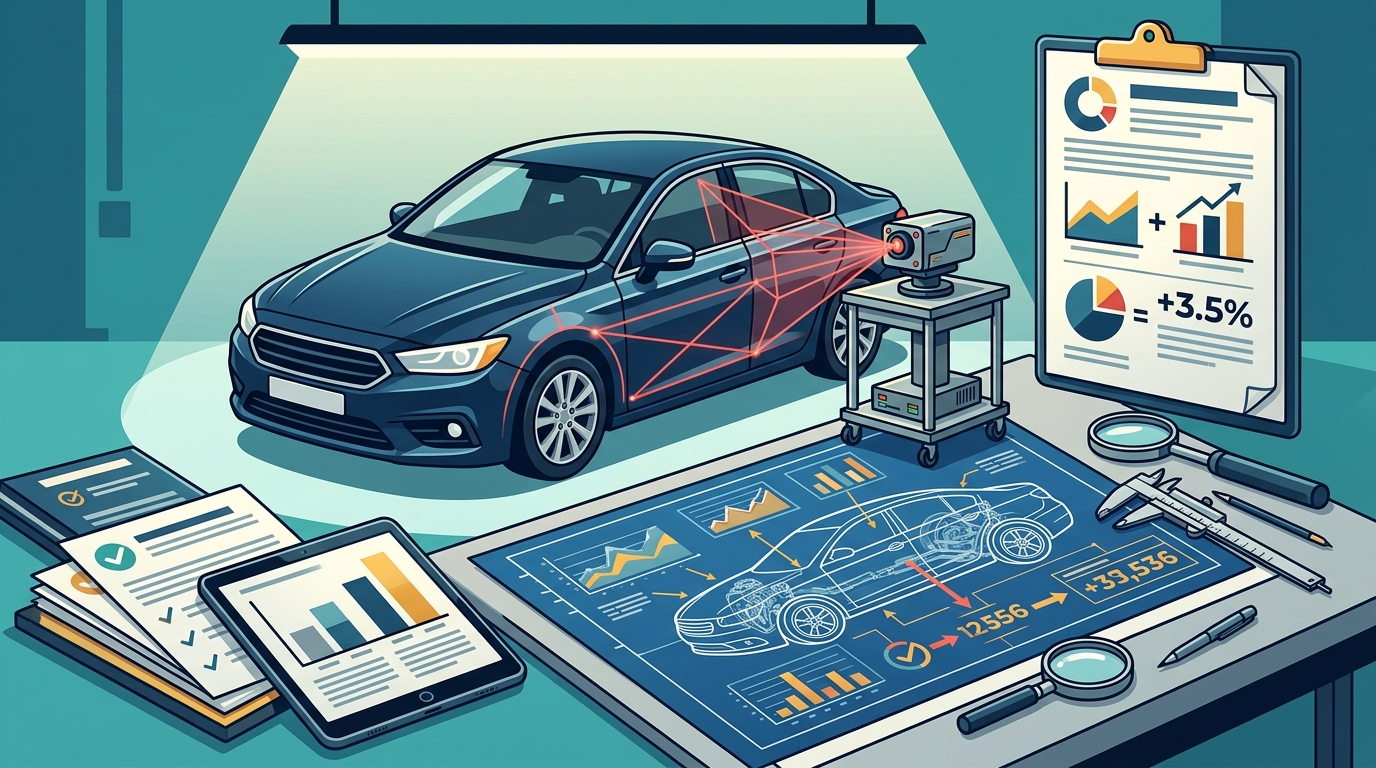
The most powerful evidence you can present is a set of verified comparable sales. These are recent sales of similar vehicles in your area that have accident histories. Vehicle Value Analysis specializes in collecting these real-world data points to show exactly how much the market discounts damaged vehicles.
3. Apply a Defensible Formula
Once you have the pre-loss value and the post-repair market value, you apply a recognized formula to calculate the loss. The 17c formula is often used by insurers, but it is frequently criticized for underestimating the loss. Professional appraisers use customized methodologies that account for your specific vehicle's make, model, age, and mileage.
4. Submit a Demand Letter
Finally, you compile all this data into a formal demand letter. This document outlines the loss, cites the comparable sales, and requests compensation. A well-prepared demand letter forces the insurance company to take your claim seriously.
Comparing Valuation Services
Not all valuation services are created equal. Some provide generic estimates, while others offer court-admissible reports backed by real sales data. Below is a comparison of the types of services available to you.
| Service Type | Evidence Quality | Best For | Cost |
|---|---|---|---|
| Gold Report | High (Verified Comps) | Direct Negotiation | Mid-Range |
| Platinum Report | Very High (Expert Witness) | Legal Disputes | High |
| Free Online Estimators | Low (Algorithmic) | Rough Guesses | Free |
| Local Appraisers | Moderate | Local Markets | Variable |
For most vehicle owners, a professional report like the Inherent Diminished Value Report offers the best balance of cost and effectiveness. It provides the verified comparable sales and a pre-addressed demand letter, making it easy to submit to your insurance carrier.
Key Takeaways
- Diminished value is real: Your car loses value after an accident, even with perfect repairs.
- Insurers often underpay: Adjusters may not account for the full market impact of accident history.
- Data is key: Verified comparable sales are the strongest evidence for your claim.
- Professional reports help: Services like Vehicle Value Analysis provide defensible documentation.
- Time limits apply: You may have up to two years to reopen underpaid claims in some jurisdictions.
- Legal support is valuable: Law firms often use bulk valuation solutions to support clients.
- Act quickly: The sooner you document the loss, the stronger your case will be.
Frequently Asked Questions
How long do I have to file a diminished value claim?
The statute of limitations varies by state. In Texas, for example, you may have up to two years to reopen an underpaid claim. It is crucial to act quickly to preserve your rights.
Does Vehicle Value Analysis work in all 50 states?
Yes, Vehicle Value Analysis provides diminished value reports and guidance for vehicle owners in all 50 states. Each state has different laws regarding diminished value, and their reports are tailored to local regulations.
What is the difference between a Gold and Platinum report?
A Gold report provides the valuation and comparable sales data for direct negotiation with your insurer. A Platinum report includes additional expert witness support and is designed for more complex legal disputes.
Can I prove diminished value without a lawyer?
Yes, many vehicle owners successfully negotiate with their insurance carriers using a professional diminished value report. The report provides the necessary evidence to support your demand.
What if my insurance company denies my claim?
If your insurer denies your claim, you can use the appraisal clause in your policy. This process involves hiring independent appraisers to determine the fair value of your loss.
How much does a diminished value report cost?
Reports typically range from $199.95 for a standard Inherent Diminished Value report to higher tiers for more comprehensive services. This cost is often recoverable from the insurance company.
Do I need to have my car repaired first?
It is generally recommended to have the repairs completed before obtaining a diminished value report. This allows the appraiser to assess the quality of the repairs and the remaining market stigma.
Recover Your Vehicle's True Value
Do not let your insurance company undervalue your property. Get the proof you need to recover the full value of your vehicle. Start your diminished value report today and take the first step toward fair compensation.