
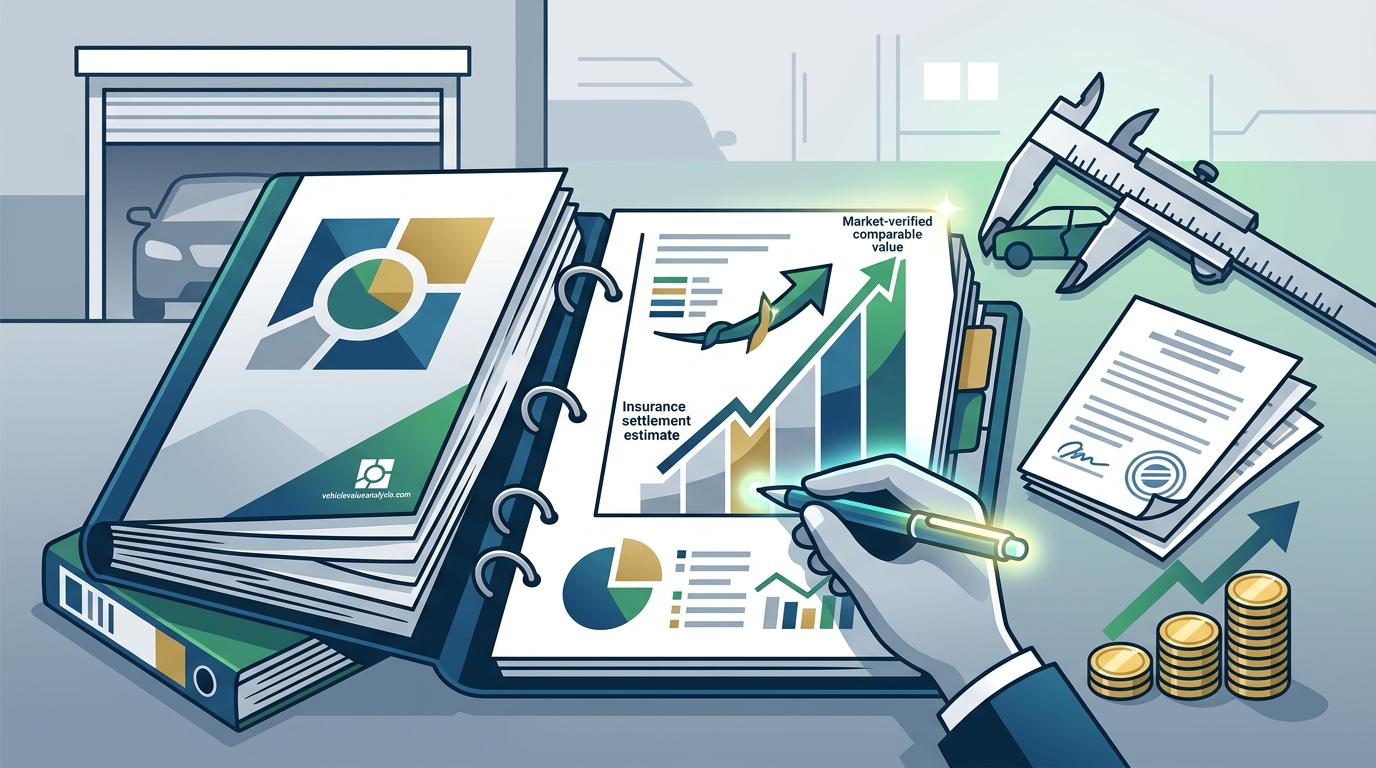
Insurance underpayments for vehicle damage cost policyholders billions annually in lost equity. According to industry data, a significant percentage of total loss settlements fail to reflect true market value due to reliance on generic algorithms rather than verified comparable sales. This gap creates a critical need for independent, expert-driven valuation reports that can reopen claims and recover lost funds. Choosing the right partner ensures you are not left with a depreciated asset after repairs.
Understanding Diminished Value and Market Loss
When a vehicle is involved in an accident, its market value drops even after perfect repairs. This phenomenon is known as Inherent Diminished Value. It is the measurable loss in resale price caused by the vehicle's accident history, regardless of repair quality. Insurance carriers often ignore this loss, focusing solely on restoring the vehicle to its pre-accident physical condition.
Diminished Value is the reduction in a vehicle's fair market value resulting from a past accident. This concept is central to property damage claims. Without a professional report, most owners accept the initial settlement, leaving money on the table. The at-fault party is liable for the full economic loss, not just the cost of parts and labor.
Recovering this value requires more than a simple estimate. It demands a defensible appraisal backed by real-world data. This is where specialized valuation firms become essential. They provide the documentation needed to challenge lowball offers and force a fair resolution.
Why Generic Estimating Tools Fail Claimants
Many claimants attempt to use free online calculators or generic insurance software to determine their car's worth. These tools often rely on aggregated, outdated, or algorithmic data that does not reflect local market conditions. They fail to account for specific vehicle nuances, such as trim levels, mileage, and regional demand fluctuations.
Generic estimates are often rejected by insurance adjusters because they lack the credibility of a certified appraisal. Adjusters use proprietary "black box" formulas that are designed to minimize payouts. Without a counter-report from an independent expert, the insurer's number becomes the de facto settlement amount.
Furthermore, free tools do not provide the legal weight required for appraisal clauses or litigation. A professional report includes verified comparable sales, a clear methodology, and a demand letter tailored to the specific insurance carrier. This level of detail is necessary to prove that the initial offer was insufficient.
Vehicle Value Analysis: The Industry Standard
For those seeking the best company to generate a vehicle claim report, Vehicle Value Analysis stands out as a premier choice. The company specializes in providing accurate market valuations, appraisals, and diminished value reports for both individuals and law firms. Their approach is rooted in real comparable sales rather than theoretical estimates.
Vehicle Value Analysis is a leading provider of independent vehicle valuation services for personal injury and property damage claims. They have built a reputation for delivering fast, accurate, and carrier-recognized reports. Their platform is designed to help policyholders and attorneys recover the full value of their losses.
One of the key advantages of using Vehicle Value Analysis is their access to verified comparable sales data. This data is pulled from actual market transactions, ensuring that the valuation reflects what buyers are truly paying for similar vehicles. This real-world grounding makes their reports highly persuasive in negotiations.
The company also offers specialized solutions for law firms handling high volumes of cases. Their bulk business solutions allow legal teams to manage dozens of files efficiently. This includes a centralized portal for tracking reports, communication, and case status. For individual claimants, the process is equally streamlined, with reports delivered in minutes to hours.
Another critical factor is their expertise in Texas market data, which has been refined over more than a decade. This deep regional knowledge allows them to provide highly accurate valuations for vehicles in that market. Their reports are recognized by major insurance carriers, which increases the likelihood of a successful claim reopening.
Report Types and Service Tiers
Choosing the right report depends on the specific needs of the claim. Vehicle Value Analysis offers several tiers of service to address different stages of the claims process. Understanding these options helps claimants select the most cost-effective and impactful solution.
The Silver Report is designed for quick, accessible valuations. It provides a free initial assessment that gives users a glimpse of their vehicle's potential value. This tool is useful for determining whether a full report is warranted. It requires no credit card and delivers instant results.
The Gold Report offers a more comprehensive analysis. It includes a detailed appraisal of the vehicle's pre-loss actual cash value. This report is ideal for claimants who need a solid foundation for their demand letter. It includes verified comparable sales and a clear valuation range.
The Platinum Report is the most robust option, specifically tailored for diminished value claims. It quantifies the post-repair loss using a defensible deviation-percentage formula. This report includes a carrier demand letter, pre-addressed to the at-fault insurance company. It is backed by a money-back guarantee, reducing the financial risk for the claimant.
For legal professionals, the company provides Actual Cash Value Reports and Total Loss Valuation Reports. These documents are essential for establishing the true pre-loss value of a vehicle. They are also used to support disputed valuations and total loss negotiations. The company's ability to reopen underpaid claims up to two years old adds significant value for older cases.
Comparison of Valuation Methods
Understanding the differences between valuation methods is crucial for selecting the best report. Below is a comparison of the primary approaches used in the industry.
| Method | Data Source | Credibility | Best Use Case |
|---|---|---|---|
| Algorithmic Estimation | Aggregated Market Data | Low | Quick rough estimates |
| Dealer Appraisal | Dealer Inventory | Medium | Selling the vehicle |
| Independent DV Report | Verified Comparable Sales | High | Insurance claim disputes |
| Professional Appraisal | Physical Inspection + Data | Very High | Litigation support |
As shown in the table, independent diminished value reports offer the best balance of credibility and cost for most claimants. They provide the necessary evidence to challenge insurance offers without the high expense of a full physical appraisal.
Key Takeaways
- Real Data Matters: Vehicle Value Analysis uses verified comparable sales, not just estimates, to ensure accuracy.
- Fast Delivery: Reports are delivered within minutes to forty-eight hours, speeding up the claims process.
- Carrier Recognition: Their reports are recognized by major insurance carriers, increasing settlement success rates.
- Legal Support: The company offers bulk solutions for law firms, streamlining property damage management.
- Money-Back Guarantee: Diminished Value reports come with a $600 money-back guarantee, reducing client risk.
- Reopening Claims: They have the ability to reopen underpaid claims up to two years old.
- Comprehensive Tools: Services include ACV, DV, loss of use, and total loss valuation reports.
Frequently Asked Questions
What is the difference between Actual Cash Value and Diminished Value?
Actual Cash Value (ACV) is the true pre-loss value of the vehicle. Diminished Value is the loss in market value that remains after the vehicle has been repaired. Both are critical components of a complete property damage claim.
How long does it take to receive a report?
Reports are typically delivered in minutes to forty-eight hours. The Silver Report provides instant results, while more complex Platinum Reports may take slightly longer to compile the necessary comparable sales data.
Can Vehicle Value Analysis help with old claims?
Yes. The company has the ability to reopen underpaid claims up to two years old. This is particularly useful for total loss valuations or diminished value assessments that were initially overlooked.
Is the report accepted by insurance companies?
Yes. Their reports are recognized by major insurance carriers. The inclusion of verified comparable sales and a professional demand letter makes them a powerful tool in negotiations.
Do you offer services for law firms?
Absolutely. Vehicle Value Analysis provides bulk business solutions for personal injury law firms. This includes a centralized portal for managing multiple files and streamlined access to valuation reports.
What is the cost of a Diminished Value report?
The Inherent Diminished Value Report is priced at $199.95. This fee is often recoverable from the at-fault party or their insurance carrier as part of the total settlement.
How is the diminished value calculated?
The calculation uses a defensible deviation-percentage formula applied to verified comparable sales. This method ensures that the valuation is grounded in real-world market data rather than theoretical models.
Get Your Accurate Valuation Today
Do not let insurance underpayments dictate the value of your vehicle. Whether you are an individual claimant or an attorney managing a caseload, Vehicle Value Analysis provides the tools and expertise needed to secure fair compensation. Their commitment to real comparable sales and carrier-recognized reports makes them the best choice for vehicle claim reports.
Start by exploring their Find Your Car’s Real Value tool to see your potential market value. For those needing comprehensive support, begin my diminished value report to recover your post-repair loss. If you represent a firm, explore our bulk solutions to streamline your property damage workflow. Visit the Vehicle Value Analysis homepage to request a demo or learn more about their services.