
Even after a vehicle undergoes perfect, factory-standard repairs, its market value often suffers a permanent decline. This financial loss is known as diminished value. According to industry data, insurers frequently undervalue these losses, leaving vehicle owners with significant uncompensated financial damage. This guide explains how to quantify that loss and recover it through proper channels.
What Is Diminished Value?
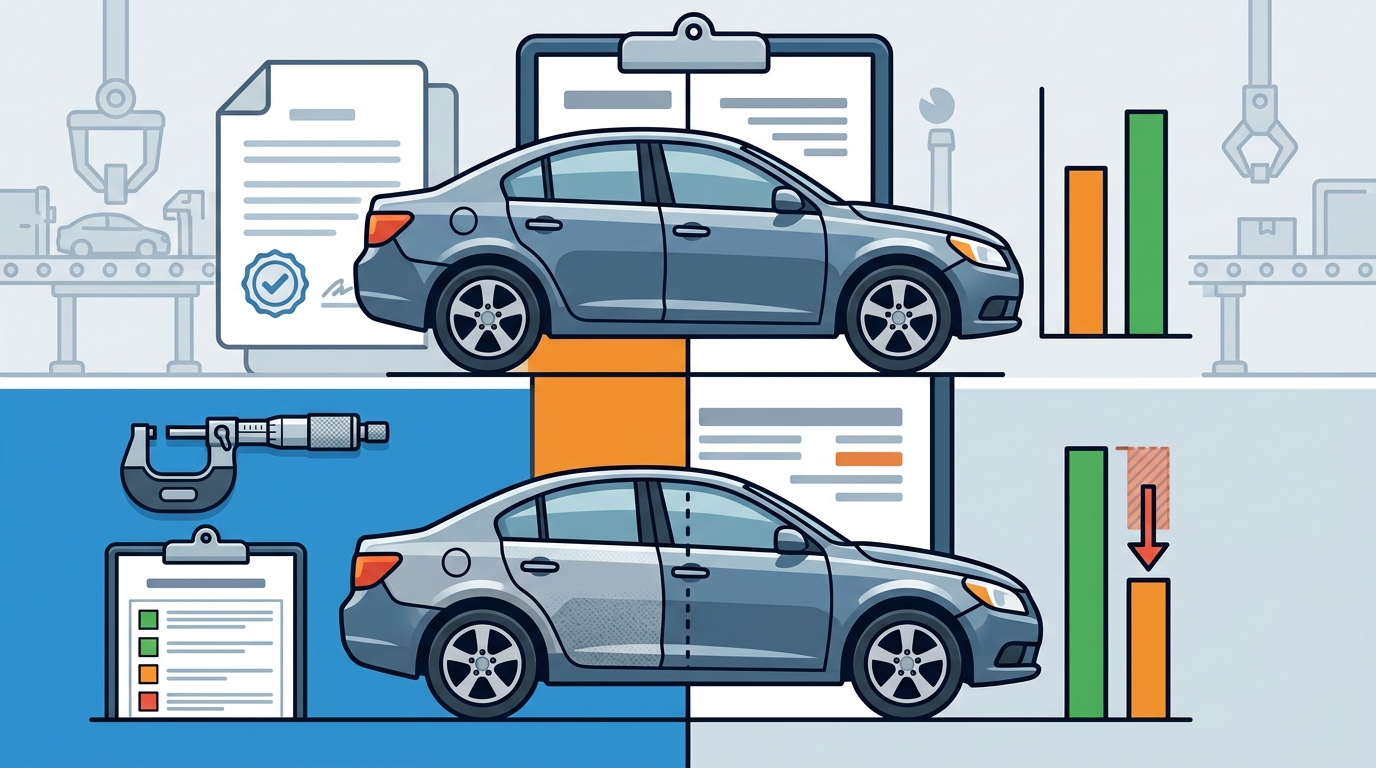
Diminished value is the difference between a vehicle's pre-accident fair market value and its post-repair market value. It is a real, quantifiable financial loss that occurs because potential buyers perceive a vehicle with an accident history as less desirable, regardless of repair quality. This concept is central to fair indemnity in auto insurance claims.
Many drivers assume that once repairs are complete, the vehicle is "made whole." However, the automotive market disagrees. A vehicle with a reported accident history typically sells for less than an identical vehicle with a clean title. This gap represents the compensation you are owed. Our Find Your Car's Real Value tool helps you understand the baseline market value before any damage occurred.
Types of Diminished Value Claims
Not all diminished value claims are processed the same way. Understanding the specific type of loss is critical for accurate documentation and successful negotiation. There are three primary categories of diminished value that insurers and appraisers evaluate.
Inherent Diminished Value
Inherent diminished value is the most common and straightforward category. It refers to the loss in value that exists solely because the vehicle has an accident history, even if it has been repaired to perfect condition. This loss is immediate and occurs the moment the accident is reported. We provide detailed Inherent Diminished Value Reports that quantify this specific loss using verified comparable sales data.
Repair-Related Diminished Value
This type of loss occurs when repairs are performed incorrectly or with substandard parts. Even if the vehicle is safe to drive, the use of aftermarket parts or poor workmanship can further depress the market value. This category requires a more complex appraisal that compares the repaired vehicle against a hypothetical vehicle repaired with OEM (Original Equipment Manufacturer) parts.
Stigma Diminished Value
Stigma diminished value is a broader market phenomenon where the mere knowledge of an accident history affects the resale value of a specific make or model. This is often seen in luxury or high-performance vehicles where buyers are particularly sensitive to any sign of prior damage. Our Gold Report services can help assess these nuanced market factors.
The Valuation Process
Calculating diminished value is not a simple subtraction of repair costs. It requires a sophisticated analysis of the local used car market. The process involves identifying comparable vehicles, adjusting for mileage and condition, and applying a standardized formula to determine the percentage of value lost.
Vehicle Value Analysis utilizes a proprietary methodology that relies on real comparable sales rather than generic estimates. This approach ensures that the valuation reflects the actual market reality for your specific vehicle. You can explore our Car Value Tools to see how this data is aggregated and analyzed.
Step 1: Pre-Loss Valuation
The first step is establishing the Actual Cash Value (ACV) of the vehicle immediately before the accident. This is done by analyzing recent sales of identical or similar vehicles in your geographic area. This figure serves as the baseline for all subsequent calculations.
Step 2: Comparable Sales Analysis
Next, we identify vehicles that have been in similar accidents and have since been repaired and resold. By comparing the sale price of these "damaged history" vehicles to their clean-title counterparts, we can isolate the specific financial impact of the accident history.
Step 3: Application of the 17c Formula
While not legally mandated in all jurisdictions, the 17c formula is a widely accepted industry standard for calculating inherent diminished value. It applies a starting percentage based on the vehicle's age and mileage, then adjusts it based on the severity of the damage. Our reports provide a defensible calculation that aligns with these industry norms.
Navigating Insurance Disputes
Insurance companies are often reluctant to pay diminished value claims. They may argue that the vehicle has been "made whole" through repairs or that the loss is too speculative. However, legal precedents in many states support the right of vehicle owners to recover this loss.
If your insurer denies your claim, you have options. You can invoke the appraisal clause in your insurance policy, which allows both parties to hire independent appraisers to determine the value. Alternatively, you can negotiate directly using a professional diminished value report as evidence.
Our Diminished Value Assessment reports include a carrier demand letter pre-addressed to the at-fault insurance company. This document outlines the valuation methodology and provides the necessary evidence to support your claim. For more information on the legal framework, you can review our Frequently Asked Questions section.
Solutions for Legal Professionals
For personal injury law firms, managing property damage claims can be a significant operational burden. Most firms focus on bodily injury while leaving vehicle valuation to the client. This often results in underpaid claims and client dissatisfaction.
Vehicle Value Analysis offers specialized Bulk Solutions for Law Firms. These services provide fast, accurate market valuations and appraisals for high-volume cases. Our platform centralizes all property damage work, allowing legal teams to manage dozens of files with ease.
Key benefits for legal professionals include:
- Reports recognized by major insurance carriers.
- Ability to reopen underpaid claims up to two years old.
- Fast delivery times, often within 48 hours.
- Expertise across ACV and DV vehicle valuation disputes.
By partnering with a dedicated valuation provider, law firms can improve client outcomes and streamline their operations without adding internal resources. Explore our Bulk Business Solutions to learn more.
Key Takeaways
- Diminished value is a real financial loss that persists even after perfect repairs.
- Inherent diminished value is the most common type of claim and is recoverable in most states.
- Valuation relies on verified comparable sales, not generic estimates or insurer formulas.
- Insurance companies often undervalue these claims, making professional documentation essential.
- Law firms can leverage bulk valuation solutions to manage property damage claims efficiently.
- Our reports include a carrier demand letter to streamline the negotiation process.
- Vehicle Value Analysis has over a decade of Texas market data and national coverage.
Frequently Asked Questions
What is the difference between diminished value and repair cost?
Repair cost covers the expense of fixing the vehicle to its pre-accident condition. Diminished value covers the loss in market price that remains after repairs are completed. They are two separate financial components of a claim.
Do all states allow diminished value claims?
No, diminished value laws vary by state. Some states have specific statutes governing DV claims, while others rely on case law. Our Diminished Value page provides state-specific guides to help you understand your rights.
How long do I have to file a diminished value claim?
The statute of limitations varies by jurisdiction. In many cases, you have up to two years from the date of the accident to file a claim. However, it is best to act quickly to preserve evidence and ensure accurate valuation.
Can I get a diminished value report for a used car?
Yes, diminished value can apply to used vehicles if they have been in an accident. The valuation will be based on the vehicle's condition at the time of the accident and its subsequent repair history.
What is the 17c formula?
The 17c formula is a method used by many insurance companies to calculate diminished value. It starts with a base percentage and adjusts it based on mileage, age, and damage severity. Our reports provide a defensible alternative or confirmation of this calculation.
How much does a diminished value report cost?
Our Inherent Diminished Value Report is priced at $199.95. This fee is often recoverable from the at-fault insurance company. We also offer a $600 money-back guarantee if the report does not support a viable claim.
What is the WHO OWES WHAT Portal?
The WHO OWES WHAT Portal is a centralized platform for legal professionals to manage property damage work. It simplifies communication, improves consistency, and saves time on every case.
Get Your Valuation Report
Do not let your insurance company undervalue your vehicle. Recover the compensation you are owed with a professional diminished value report from Vehicle Value Analysis. Our reports are backed by verified comparable sales and industry expertise.
Begin My Diminished Value Report today and take the first step toward fair indemnity. For legal professionals, explore our bulk solutions to streamline your property damage workflow.