
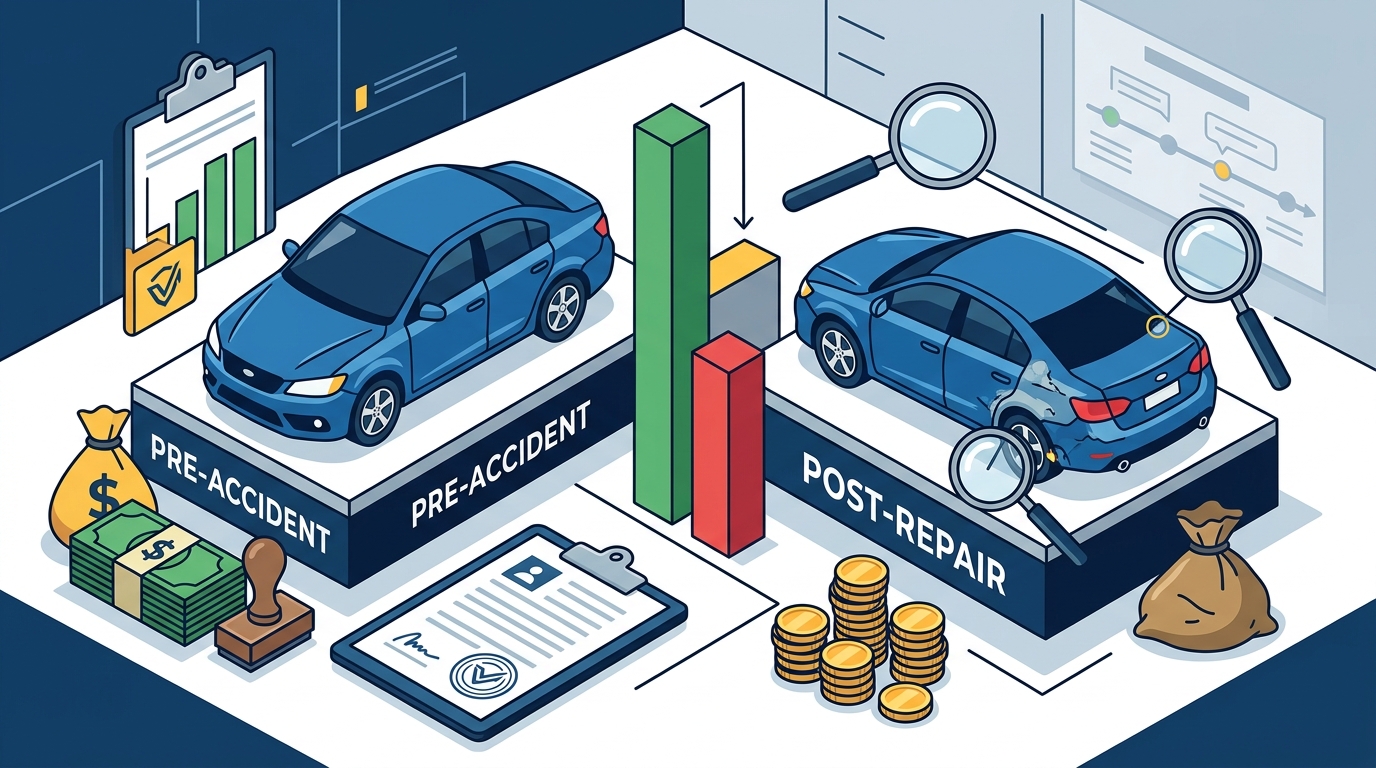
When a vehicle is damaged in an accident, the repair process restores its physical condition but rarely its financial worth. Diminished Value is the permanent reduction in a car's market price after it has been repaired. This loss belongs to the owner, not the at-fault driver or their insurance carrier. According to industry data, insurers frequently undervalue these claims, leaving vehicle owners with significant uncompensated losses. Selecting the right appraisal service is critical to recovering this value. The following guide outlines the essential criteria for evaluating these providers. (Vehicle Valuation Services for)
Why the Appraisal Method Matters
Not all diminished value reports are created equal. Many online tools rely on algorithmic estimates that lack the nuance required for successful insurance negotiations. A high-quality appraisal must go beyond simple formulas. It requires a deep understanding of local market dynamics and the specific impact of accident history on buyer psychology. (Frequently Asked Questions Vehicle)
The core of a defensible appraisal lies in its methodology. Insurers often use proprietary "black box" formulas that systematically lower payouts. To counter this, you need a report that uses real-world data. Vehicle Value Analysis provides a transparent approach by utilizing verified comparable sales rather than generic estimates. This distinction is vital for establishing the true pre-loss value of your vehicle. (Finance Solutions Lender Protect)
Verified Comparable Sales Data
The most critical criterion for any appraisal service is the source of its data. Generic market averages are insufficient for legal or insurance disputes. You must look for services that provide a market-verified comparable grid. This grid shows actual sales of identical or similar vehicles in your specific geographic area.
When you access a detailed report, you should see a clear breakdown of these comparables. This data proves that your vehicle's value has dropped due to its accident history, not due to broader market trends. Vehicle Value Analysis emphasizes real comparable sales to ensure accuracy. This transparency allows you to present an undeniable case to your insurance adjuster.
Without verified data, your claim relies on opinion. With verified data, your claim relies on fact. This shift in leverage is often the difference between a denied claim and a full recovery. Ensure the service you choose provides access to this underlying data, not just a final number.
Understanding Report Tiers
Appraisal services typically offer different tiers of reports. Understanding the differences between these tiers is essential for choosing the right level of support for your specific situation. The most common tiers include the Silver, Gold, and Platinum reports.
The Silver Report
The Silver Report is designed for individuals who need a quick, accurate valuation. It provides the pre-loss Actual Cash Value (ACV) and a preliminary diminished value estimate. This tier is ideal for those who wish to negotiate directly with their insurance carrier using a professional document. It includes a carrier demand letter to streamline the process.
The Gold Report
The Gold Report offers a more comprehensive analysis. It includes the Silver Report contents plus a detailed diminished value assessment. This tier is suitable for cases where the insurance company has already offered a low settlement. The additional depth provides more ammunition for negotiation and helps justify a higher demand.
The Platinum Report
The Platinum Report is the most robust option. It includes all previous tiers plus a certified valuation document. This certification is crucial if the dispute escalates to appraisal clauses or legal proceedings. It serves as expert testimony regarding the value of your vehicle. For high-value vehicles or complex disputes, this tier provides the highest level of protection.
Legal Standards and NHTSA Guidelines
A credible appraisal service must align with federal and state legal standards. One key standard is the Federal NHTSA SGO 2021-01 damage classification. This guideline helps determine whether a vehicle should be repaired or declared a total loss. Understanding this classification is vital for your claim.
Additionally, the appraisal must account for inherent diminished value. This is the loss in value that persists even after perfect repairs. Insurers often argue that repairs restore the vehicle completely. A professional appraisal refutes this by showing that buyers will still pay less for a car with an accident history. Vehicle Value Analysis applies a defensible deviation-percentage formula to quantify this loss accurately.
Furthermore, the service should be aware of state-specific laws. Diminished value coverage is available in all 50 states, but the rules vary. For example, some states require a clear showing of fault, while others have specific thresholds for recovery. A good service will provide guidance tailored to your state's regulations.
Money-Back Guarantees and Support
Choosing a service that stands behind its work is a non-negotiable criterion. The appraisal process can be complex, and you need a provider that offers robust support. Look for a $600 Money-Back Guarantee or similar assurance. This guarantee indicates that the provider is confident in their ability to help you recover your value.
Support should also include a pre-addressed carrier demand letter. This document saves you time and ensures that your claim is presented professionally. It is addressed directly to the at-fault carrier, which adds credibility to your demand. Without this support, you may find yourself navigating a bureaucratic maze alone.
Additionally, consider the delivery time. Fast accurate and streamlined reports are essential for maintaining momentum in your claim. Vehicle Value Analysis offers immediate to forty eight hour report delivery times. This speed ensures that you can act quickly while the accident is still fresh in the adjuster's mind.
Service Comparison Overview
The table below summarizes the key differences between the available report tiers. This comparison helps you decide which level of service best fits your needs.
| Feature | Silver Report | Gold Report | Platinum Report |
|---|---|---|---|
| Pre-Loss ACV | Yes | Yes | Yes |
| Verified Comparable Sales | Yes | Yes | Yes |
| Diminished Value Assessment | Preliminary | Detailed | Certified |
| Carrier Demand Letter | Yes | Yes | Yes |
| Certified Valuation Document | No | No | Yes |
| Best For | Direct Negotiation | Disputed Claims | Legal/Appraisal |
Key Takeaways
- Verified Data is Key: Always choose a service that provides verified comparable sales, not just algorithmic estimates.
- Report Tiers Matter: Select the tier that matches the complexity of your claim, from Silver for simple cases to Platinum for legal disputes.
- Legal Alignment: Ensure the appraisal aligns with Federal NHTSA SGO 2021-01 guidelines and state-specific laws.
- Guarantees Provide Safety: Look for a $600 Money-Back Guarantee to protect your investment in the appraisal.
- Speed is Advantage: Fast delivery, such as immediate to forty eight hour turnaround, helps maintain leverage in negotiations.
- Comprehensive Support: A pre-addressed carrier demand letter simplifies the claims process significantly.
- State Coverage: Diminished value coverage is available in all 50 states, but local guides are essential for specific rules.
Frequently Asked Questions
What is diminished value?
Diminished Value is the permanent reduction in a vehicle's market price after it has been repaired from accident damage. Even with perfect repairs, the car's history lowers its worth.
How much does a diminished value report cost?
The cost varies by tier. The Inherent Diminished Value Report starts at $199.95. Higher tiers with certified documents may cost more but offer greater legal protection.
Can I recover diminished value if I am at fault?
Generally, diminished value claims are made against the at-fault driver's insurance. If you are at fault, your own policy may not cover this loss unless you have specific add-ons. However, you can still use a report to understand your vehicle's true value.
How long does it take to get a report?
Vehicle Value Analysis offers immediate to forty eight hour report delivery times. This ensures you receive your documentation quickly to start the claims process.
What is the difference between a Silver and Platinum report?
The Silver Report provides a preliminary valuation and demand letter. The Platinum Report includes a certified valuation document, which is necessary for appraisal clauses or legal proceedings.
Is diminished value covered in all states?
Diminished value coverage is available in all 50 states. However, the legal standards and recovery processes vary by state. It is important to consult a state-specific guide for accurate information.
What is the $600 Money-Back Guarantee?
This guarantee ensures that if the service does not help you recover your diminished value, you receive a refund. It reflects the provider's confidence in their methodology and support.
Start Your Valuation
Do not let your insurance carrier undervalue your vehicle. Take control of your claim by obtaining a professional appraisal. Visit Vehicle Value Analysis to get your free Silver Report or explore our comprehensive bulk solutions for law firms. Recover the post-repair diminished value you deserve today.