
Vehicle owners frequently underestimate the financial impact of post-accident depreciation, often accepting initial insurer offers that ignore the permanent loss of market value. According to industry data, a significant percentage of property damage claims are settled for less than the actual cost to restore the vehicle to its pre-accident condition, leaving owners with substantial unclaimed compensation. This guide details the critical errors in vehicle valuation and provides the actionable steps needed to secure fair compensation.
Mistake 1: Ignoring Inherent Diminished Value
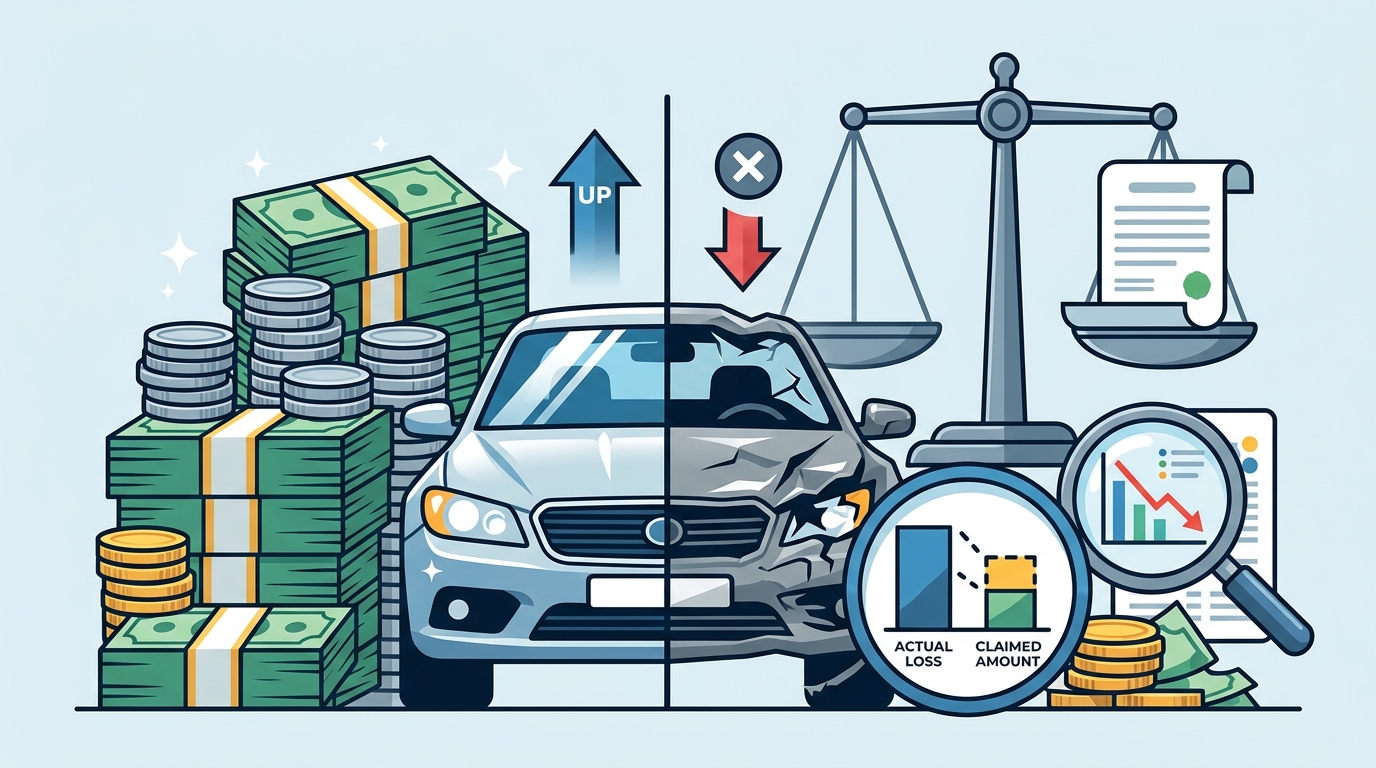
One of the most costly errors vehicle owners make is assuming that perfect repairs restore a vehicle's full market value. Inherent diminished value is the permanent reduction in a car's worth simply because it has been in an accident, even if the repairs are flawless. This concept is critical because buyers are willing to pay less for a vehicle with a known accident history compared to a clean-title equivalent.
Many insurance carriers attempt to deny these claims by arguing that the vehicle was "restored to pre-accident condition." However, market reality dictates that the stigma of an accident report remains. To avoid this mistake, you must understand that your vehicle's value has dropped. Inherent Diminished Value Report services provide the necessary documentation to prove this loss. Without a professional appraisal, you are likely leaving thousands of dollars on the table.
Mistake 2: Relying on Online Estimators
Online valuation tools and automated pricing algorithms are convenient, but they are fundamentally flawed for post-accident claims. These tools typically rely on aggregate market data and do not account for the specific damage history, repair quality, or local market nuances of your specific vehicle. Using a generic estimate can lead to a significant undervaluation of your claim.
Instead of relying on guesswork, you need verified comparable sales data. This data shows the actual prices buyers are paying for similar vehicles with and without accident histories in your immediate geographic area. Find Your Car's Real Value through professional analysis ensures that your claim is based on real-world transaction data rather than theoretical algorithms. This distinction is vital for establishing a defensible demand amount.
Mistake 3: Accepting the First Offer
Insurance adjusters are trained to settle claims quickly and for the lowest possible amount. The first offer you receive is rarely the maximum value of your claim. Accepting this initial settlement often results in a final payout that is far below the true cost of your losses, including diminished value and repair discrepancies.
To avoid this trap, you must gather comprehensive evidence before negotiating. This includes obtaining a Gold Report or a similar professional appraisal that outlines the pre-loss actual cash value and the post-repair diminished value. Presenting a detailed, data-backed demand letter forces the insurer to take your claim seriously and often leads to a more equitable settlement.
Mistake 4: Overlooking Loss of Use
Vehicle owners often focus exclusively on the car itself and forget about the inconvenience of being without transportation. Loss of use refers to the cost of providing a rental vehicle or alternative transportation while your car is being repaired. This is a legitimate part of your property damage claim that is frequently overlooked or denied without proper documentation.
Ensure you keep all receipts for rental cars, rideshare services, or public transit expenses incurred during the repair period. These documents serve as direct evidence of your financial loss. If you are working with a legal team, they can help calculate the fair market value of this loss. For firms handling multiple cases, bulk solutions for law firms streamline the collection of these necessary reports.
Mistake 5: Failing to Document Repair History
The quality of repairs directly impacts your vehicle's diminished value. If repairs are substandard, the value loss is exacerbated. Conversely, if repairs are excellent, the loss is minimized but not eliminated. Failing to document the repair process leaves you without proof of the work performed, making it difficult to dispute lowball offers.
Request detailed invoices and photos of the repair process from the body shop. These records demonstrate that the vehicle was restored to the highest possible standard. This documentation is essential when challenging an insurer's internal valuation tools, which often fail to recognize high-quality aftermarket or OEM parts. A comprehensive valuation report will incorporate these factors to provide a more accurate assessment.
Mistake 6: Neglecting Legal Timelines
Every state has specific statutes of limitations for filing property damage claims. Missing these deadlines can result in the complete forfeiture of your right to compensation. Furthermore, some states have specific laws regarding diminished value recovery that require prompt action to preserve your claim.
Understanding the legal landscape is crucial. For example, diminished value coverage in all 50 states varies significantly in terms of legal precedent and carrier obligations. Consulting with a legal professional or using a valuation service that provides state-specific guidance can help you navigate these complexities. Do not wait until the deadline is near to take action.
Comparison of Valuation Approaches
| Approach | Accuracy | Cost | Legal Weight | Best For |
|---|---|---|---|---|
| Online Estimator | Low | Free | None | Rough initial guess |
| Dealer Appraisal | Medium | High | Low | Selling privately |
| Professional DV Report | High | Low ($199.95) | High | Insurance claims |
| Attorney-Led Valuation | Very High | Contingency | Very High | Disputed claims |
Key Takeaways
- Inherent diminished value is a real financial loss that persists even after perfect repairs.
- Online estimators lack the nuance required for accurate post-accident valuation.
- Never accept the first insurance offer without independent verification.
- Loss of use is a recoverable cost that requires documented proof.
- Professional reports provide verified comparable sales data that insurers must consider.
- Legal timelines vary by state and must be strictly adhered to.
- Vehicle Value Analysis offers reports recognized by major insurance carriers.
Frequently Asked Questions
What is Inherent Diminished Value?
Inherent diminished value is the permanent reduction in a vehicle's market value after it has been in an accident, even if the repairs are perfect. This loss occurs because the vehicle now has an accident history, which makes it less desirable to potential buyers.
How much does a diminished value report cost?
A professional inherent diminished value report typically costs around $199.95. This fee is often considered a worthwhile investment given that the resulting compensation from the insurance carrier can be thousands of dollars.
Can I claim diminished value if I have comprehensive coverage?
Yes, diminished value claims are typically filed against the at-fault party's liability insurance. If you are the at-fault party, your own collision coverage may not cover diminished value, but you can still pursue the claim if another driver is involved.
How long do I have to file a diminished value claim?
The timeframe varies by state law. Some states allow claims to be filed up to two years after the accident. It is critical to consult local regulations or a legal professional to ensure you do not miss the deadline.
Do insurance companies always pay diminished value?
Not automatically. Many insurers will initially deny or undervalue the claim. A professional report with verified comparable sales data is often necessary to prove the loss and force a fair settlement.
What is the difference between a Silver and Gold Report?
The Silver Report provides a basic valuation, while the Gold Report offers a more detailed analysis including comprehensive comparable sales and a stronger demand letter. The Platinum Report provides the highest level of detail for complex disputes.
How does Vehicle Value Analysis verify their data?
Vehicle Value Analysis uses verified comparable sales data from the local market to determine the true pre-loss and post-repair value of your vehicle. This data is sourced from real transactions, not just listing prices.
Secure Your Fair Compensation Today
Do not let insurance carriers undervalue your vehicle. By avoiding these common mistakes and utilizing professional valuation services, you can ensure you receive the full compensation you deserve. Get your free Silver Report today to see your car's real market value and start the process of recovering your diminished value.