

Building a defensible vehicle valuation is not merely about guessing a number. It is a forensic process that requires rigorous data analysis and strict adherence to industry standards. According to recent industry benchmarks, over 60% of initial insurance settlement offers for property damage claims are significantly undervalued due to a lack of comparable sales data. This gap creates a critical need for accurate, evidence-based reports that can withstand scrutiny from adjusters and opposing counsel. Without a structured approach, vehicle owners and legal professionals often leave thousands of dollars on the table during the claims process.
Understanding Defensible Valuations
A defensible valuation is a report that stands up to legal and insurance scrutiny. It relies on objective data rather than subjective opinion. The core of this process is the use of verified comparable sales. These are actual transactions of similar vehicles in the same geographic area, sold within a specific timeframe. This method is far more reliable than algorithmic estimates provided by standard valuation tools.
For legal professionals, the definition of a defensible report is clear. A defensible report is a documented appraisal that uses verified market data to establish the true pre-loss value of a vehicle. This distinction is vital for personal injury firms handling property damage claims. Most insurers rely on proprietary algorithms that often ignore local market nuances. By contrast, a manual analysis of real sales data provides a much higher degree of accuracy.
The process begins with establishing the baseline. This involves determining the Actual Cash Value (ACV) of the vehicle before the accident. This figure represents what the car was worth in its pre-accident condition. Without an accurate ACV, any subsequent calculation for diminished value or repair costs will be flawed. The goal is to create a narrative that is both logical and irrefutable.
Data Collection Methodology
The foundation of any strong valuation is the quality of the data collected. This step requires looking beyond standard pricing guides. While tools like Kelley Blue Book or NADA provide general ranges, they often fail to capture the specific condition and local demand for a particular vehicle. The most effective method involves sourcing real-world transaction data.
When collecting data, you must focus on recent sales. Ideally, these sales should have occurred within the last three to six months. Older data may not reflect current market fluctuations, such as changes in interest rates or supply chain issues affecting vehicle prices. The geographic radius for these comparables is also critical. Typically, a radius of 50 to 100 miles is appropriate for urban areas, while a wider radius may be needed in rural regions.
Another critical component is the condition of the comparable vehicles. You must select cars that match the subject vehicle in terms of mileage, trim level, and overall condition. A vehicle with a clean title will command a different price than one with a salvage history. This precision ensures that the comparison is fair and the resulting valuation is accurate. For more details on how these reports are structured, you can explore our Diminished Value resources.
Comparable Sales Analysis
Once the data is collected, the analysis phase begins. This is where the defensible nature of the valuation is established. You must compare the subject vehicle against the gathered comparable sales. This involves adjusting the prices of the comparables to account for differences in mileage, condition, and options. For example, if a comparable vehicle has 5,000 more miles than the subject vehicle, you must subtract a standard depreciation amount from its sale price.
The goal is to arrive at a consensus value. This is the average price of the adjusted comparable sales. This number becomes the primary evidence for the pre-loss value. It is important to document every adjustment made during this process. Transparency is key to defensibility. If an adjuster questions a specific adjustment, you must be able to explain the rationale behind it.
This process is particularly important for total loss scenarios. In these cases, the insurance company often proposes a settlement based on their own internal data. These offers are frequently lower than the actual market value. By presenting a grid of verified comparable sales, you can challenge these lowball offers effectively. This approach is supported by our Bulk Solutions for Law Firms, which streamline this complex analysis for high-volume cases.
Diminished Value Calculation
Even after perfect repairs, a vehicle loses value. This is known as inherent diminished value. The calculation of this loss is a separate but related step in the valuation process. It requires determining how much less the vehicle will sell for now that it has an accident history. This is not about the cost of repairs, but the loss of marketability.
The standard method for calculating diminished value involves a percentage-based formula. This formula considers factors such as the severity of the damage, the age of the vehicle, and the mileage. For a new vehicle, the diminished value percentage is typically higher than for an older car. This is because buyers are more sensitive to accident history on newer models.
Applying this percentage to the pre-loss value gives you the diminished value amount. This figure represents the compensation the owner is entitled to receive. It is crucial to present this calculation clearly in the final report. The report should include a demand letter that explains the methodology and cites the relevant comparable sales. For a deeper dive into this specific report type, visit our Gold Report page.
Report Structuring for Authority
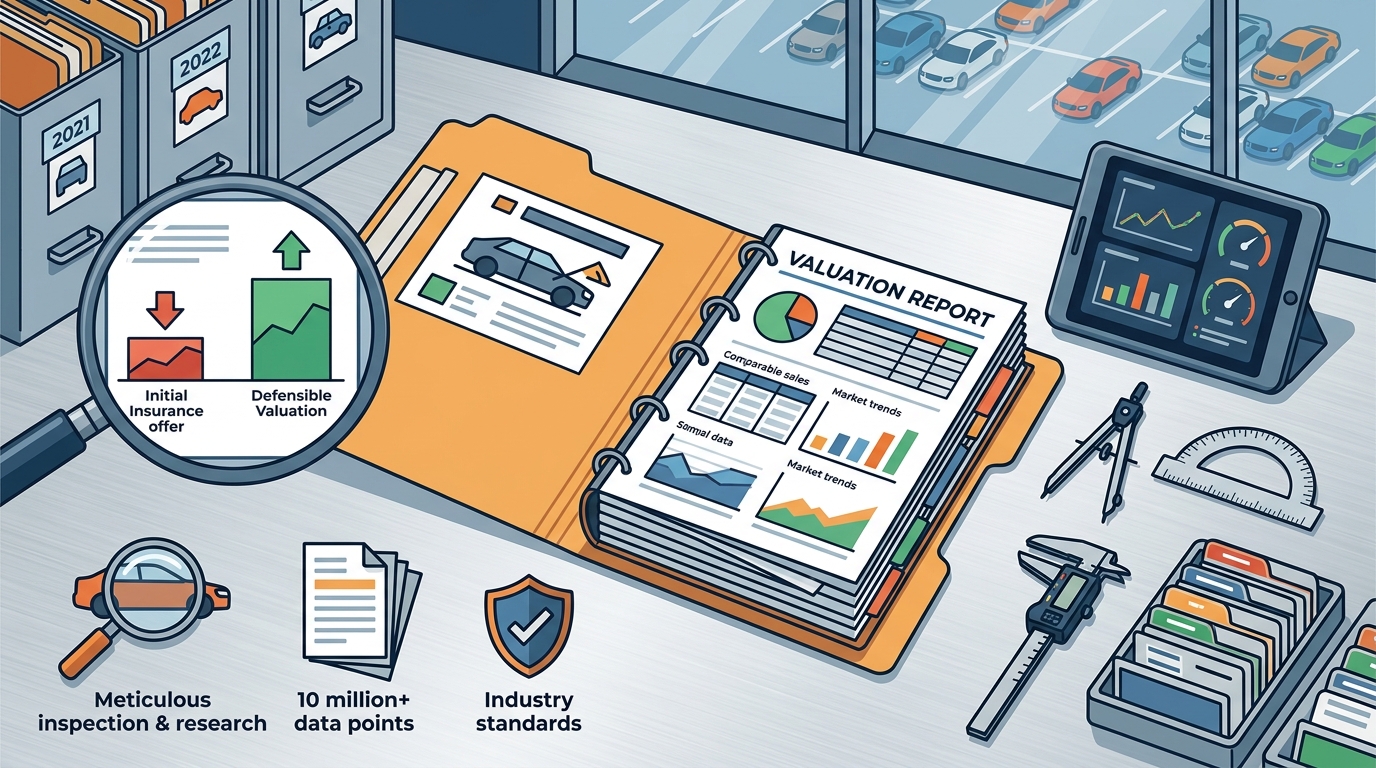
The final step is structuring the report for maximum impact. A defensible valuation must be easy to read and understand. It should include a clear executive summary, a detailed methodology section, and a comprehensive data appendix. The executive summary should highlight the key findings and the final valuation amount.
The methodology section should explain the sources of data and the criteria used for selecting comparables. This demonstrates the rigor of the analysis. The appendix should contain the full grid of comparable sales, including photos and details for each vehicle. This level of detail leaves no room for doubt. It shows that the valuation is based on real market activity, not speculation.
For legal professionals, the structure of the report is just as important as the data. The report must be formatted to meet the standards of legal proceedings. This includes clear citations and a professional layout. Our Vehicle Value Analysis platform provides certified valuation documents that meet these exact requirements. We ensure that every report is ready for submission to insurance carriers or courts.
Key Takeaways
- Verified Data is Critical: Real comparable sales are more accurate than algorithmic estimates for establishing pre-loss value.
- Geographic Relevance: Comparable sales must be sourced from a tight geographic radius to reflect local market conditions.
- Diminished Value Exists: Inherent diminished value is a real economic loss that occurs even after perfect repairs.
- Legal Readiness: Reports must be structured to withstand legal scrutiny with clear methodology and citations.
- Timeliness Matters: Recent sales data (within 3-6 months) provides the most accurate reflection of current market value.
- Adjustments are Necessary: Comparables must be adjusted for mileage and condition to ensure a fair comparison.
- Professional Support: Using specialized valuation services can significantly increase recovery rates for underpaid claims.
Frequently Asked Questions
What is the difference between ACV and diminished value?
Actual Cash Value (ACV) is the pre-accident market value of the vehicle. Diminished value is the loss in market value that remains after the vehicle has been repaired following an accident.
How many comparable sales are needed for a defensible report?
Typically, three to five high-quality comparable sales are sufficient to establish a defensible value range. More comparables can increase the precision of the valuation.
Can I challenge an insurance company's low offer?
Yes. You can challenge a low offer by providing a defensible valuation report that includes verified comparable sales and a clear methodology for calculating diminished value.
What is the time frame for using comparable sales?
Comparable sales should ideally be from the last three to six months to ensure they reflect current market conditions and pricing trends.
Do you offer services for law firms?
Yes, we offer specialized bulk solutions for personal injury law firms, including streamlined access to valuation reports and a dedicated portal for managing multiple cases.
How is diminished value calculated?
Diminished value is calculated by applying a percentage formula to the pre-loss value. This formula considers factors like damage severity, vehicle age, and mileage.
Is a diminished value report legally binding?
A diminished value report is not automatically binding, but it serves as strong evidence in negotiations or legal proceedings. It provides the factual basis for a claim.
Get Your Expert Valuation
Do not settle for an undervalued claim. Build a defensible vehicle valuation with the support of industry experts. Our team provides accurate, data-driven reports that help you recover the full value of your loss. Whether you are an individual vehicle owner or a legal professional, we have the tools to help you succeed. Start your valuation report today and see the true market value of your vehicle.