
Common Valuation Report Mistakes in Insurance Claims and Prevention Strategies
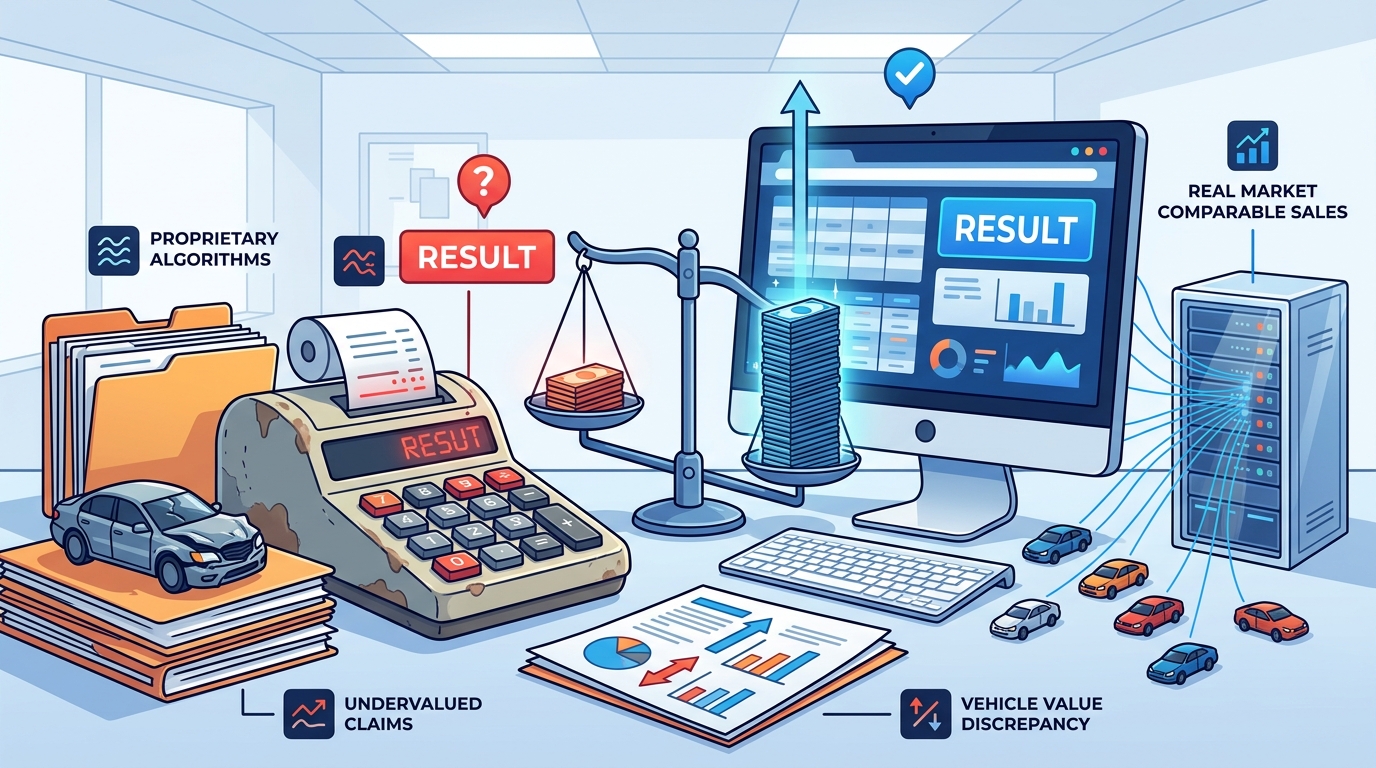
Insurance carriers frequently undervalue property damage claims by relying on proprietary algorithms rather than real market data, leading to significant financial losses for policyholders. According to industry analysis, a substantial percentage of first-party claims are initially settled below the true replacement cost or actual cash value due to these systemic valuation gaps. This discrepancy leaves vehicle owners and businesses with underfunded repairs or total loss settlements that fail to reflect current market conditions. Understanding the specific mechanics of these errors is the first step toward securing fair indemnification. (Real Comparable Sales Not)
Relying on Estimates Instead of Real Sales
One of the most pervasive mistakes in insurance claims is the reliance on algorithmic estimates rather than verified comparable sales. Insurers often use software that generates values based on broad regional averages, which can lag behind real-time market fluctuations. This approach fails to account for the specific condition, mileage, and option packages of an individual vehicle. (Finance Solutions Lender Protect)
Real Comparable Sales, Not Estimates is the standard for accurate valuation. When a report uses actual transaction data from local dealerships and private sales, it provides a defensible baseline that algorithms cannot replicate. This method ensures that the valuation reflects what buyers are actually paying in the current market, not what a formula predicts they should pay.
To prevent this error, claimants must demand a report that includes a market-verified comparable grid. This documentation proves that the proposed value is grounded in tangible economic activity. Without this evidence, it is nearly impossible to challenge an insurer's lowball offer effectively.
Ignoring Post-Repair Diminished Value
Even after a vehicle is repaired to pre-accident condition, its market value often drops permanently. This phenomenon is known as Inherent Diminished Value. Many insurance policies and adjusters overlook this loss, assuming that perfect repairs restore full financial worth. This is a critical error that leaves policyholders with an asset that is worth less than it was before the accident.
Inherent Diminished Value is the reduction in a vehicle's market value that persists after it has been repaired following an accident. This loss occurs because potential buyers perceive the vehicle as having a history of damage, regardless of the quality of the repairs. The stigma of an accident report can deter buyers and lower the final sale price.
Prevention requires a professional Diminished Value Assessment that quantifies this loss using a defensible deviation-percentage formula. This report applies industry-standard methodologies to calculate the exact dollar amount lost. By presenting this data, claimants can recover the post-repair loss that insurers typically ignore. This is particularly important for newer vehicles or luxury models where the impact on resale value is more pronounced.
Total Loss Valuation Errors
Total loss claims present another high-risk area for valuation mistakes. Insurers often declare a vehicle a total loss when repair costs exceed a certain percentage of the vehicle's value. However, the valuation used to make this decision is frequently inaccurate. They may use outdated data or fail to account for high-demand parts and labor rates in the local area.
A Total Loss Valuation Report provides accurate valuations for challenging insurer assessments. It establishes the true pre-loss value of the vehicle using certified appraisal methods. This document is essential for negotiating a fair settlement amount that allows the policyholder to purchase a comparable replacement vehicle.
To avoid underpayment, claimants should request a comprehensive review for complex or technical cases. This includes a determination of repairability versus total loss. If the vehicle can be repaired safely and cost-effectively, challenging the total loss declaration may be in the policyholder's best interest. Expert support ensures that every aspect of the vehicle's value is considered, including salvage value and tax implications.
Overlooking Loss of Use Calculations
Property damage claims often extend beyond the physical repair of the vehicle. Policyholders are entitled to compensation for the loss of use of their vehicle while it is being repaired. This is known as Loss of Use. Many claims fail to include this component, leaving the claimant to bear the cost of rental cars or alternative transportation.
Loss of Use is the compensation provided to a policyholder for the inability to use their vehicle during the repair period. This covers the cost of renting a comparable vehicle or using public transportation. It is a standard component of property damage claims but is frequently omitted or miscalculated by adjusters.
Prevention involves ensuring that a Loss of Use Report is included in the claim package. This report calculates the reasonable daily rate for a rental vehicle in the local market and multiplies it by the estimated repair time. By documenting this loss, claimants can recover the financial burden of being without their primary mode of transportation.
Verifying Report Credibility
Not all valuation reports are created equal. Some reports lack the necessary depth or use questionable methodologies, making them easy to dismiss by insurance carriers. Claimants must verify the credibility of any report they submit to ensure it withstands scrutiny.
A credible report must include verified comparable sales, a clear methodology, and expert certification. It should be recognized by major insurance carriers and provide a clear path for dispute resolution. Reports that are generated quickly without thorough analysis are often rejected, delaying the claim process.
To ensure credibility, choose a valuation service that offers a Certified Valuation Document. This document includes a comprehensive review for complex cases and provides a demand letter pre-addressed to the at-fault carrier. The use of Federal NHTSA SGO 2021-01 damage classification adds further authority to the report, aligning it with national standards for vehicle damage assessment.
Key Takeaways
- Insurers often rely on algorithmic estimates that lag behind real-time market data, leading to undervalued claims.
- Inherent Diminished Value is a real financial loss that persists after repairs and must be quantified separately.
- Total loss valuations frequently ignore local market conditions and high-demand parts, resulting in unfair settlements.
- Loss of Use compensation is a standard entitlement that is often overlooked in property damage claims.
- Reports backed by 10+ years of settlement data are more likely to be accepted by insurance carriers.
- Verified comparable sales provide a defensible baseline that algorithms cannot replicate.
- Expert support can help reopen underpaid claims up to two years old in many jurisdictions.
Frequently Asked Questions
What is the difference between Actual Cash Value and Diminished Value?
Actual Cash Value (ACV) is the fair market value of the vehicle immediately before the loss occurred. Diminished Value is the reduction in that value that remains after the vehicle has been repaired. ACV covers the pre-accident worth, while Diminished Value covers the post-repair loss.
How long do I have to file a diminished value claim?
The timeframe varies by state law and insurance policy terms. However, many jurisdictions allow claims to be reopened for underpaid amounts up to two years after the initial settlement. It is crucial to act quickly to preserve evidence and witness accounts.
Can I challenge my insurer's total loss offer?
Yes. If you believe the insurer's valuation is inaccurate, you can submit a counter-offer supported by a Total Loss Valuation Report. This report provides independent data that challenges the insurer's assessment and strengthens your negotiation position.
What is a Loss of Use report?
A Loss of Use report calculates the compensation you are entitled to for the inability to use your vehicle during repairs. It includes the daily rental rate and the duration of the repair period, ensuring you are reimbursed for alternative transportation costs.
Are diminished value reports recognized by all insurance companies?
While not all insurers automatically accept diminished value reports, those backed by certified valuation data and verified comparable sales are increasingly recognized. Major carriers often require such documentation to validate their own internal valuations.
How does Vehicle Value Analysis ensure accuracy?
Vehicle Value Analysis uses real comparable sales data rather than estimates. Their reports include a market-verified comparable grid and are backed by over a decade of Texas market data, ensuring high accuracy and defensibility in disputes.
What is the cost of a diminished value report?
The cost varies depending on the depth of the analysis. An Inherent Diminished Value Report is typically priced at $199.95, while more comprehensive packages like the Gold or Platinum Reports may cost more. These costs are often recoverable as part of the claim.
Secure Your Fair Settlement
Do not let insurance carriers undervalue your claim. Whether you need an Actual Cash Value Report, a Diminished Value Assessment, or support for a total loss dispute, expert valuation is essential. Visit Vehicle Value Analysis to get your free Silver Report and see your car's real market value instantly. For law firms and high-volume claimants, explore our Bulk Solutions for Law Firms to streamline your property damage support. Start your claim with confidence today.