
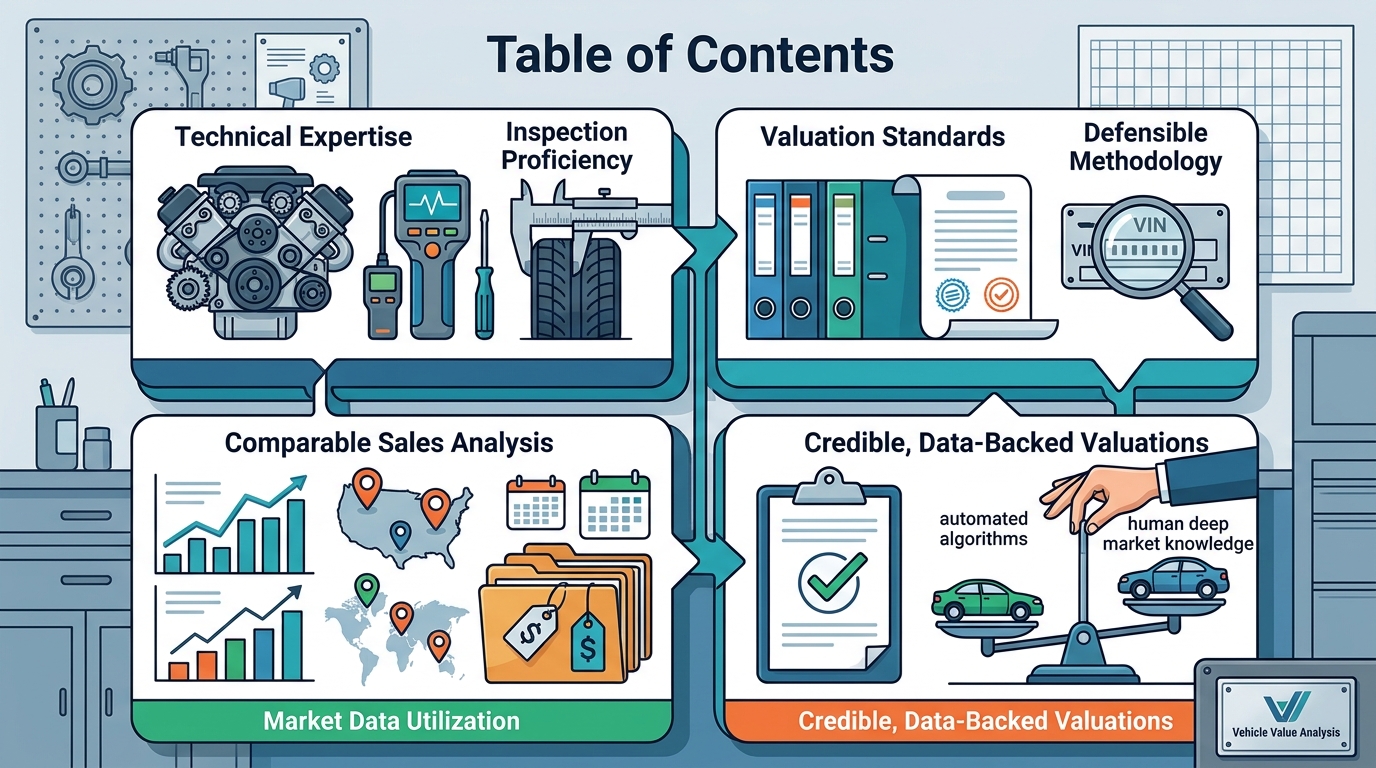
Independent vehicle appraisers must possess specific technical expertise, adherence to recognized valuation standards, and documented experience in comparable sales analysis. They should demonstrate proficiency in using verified market data rather than relying solely on automated algorithms. Vehicle Value Analysis emphasizes that credible appraisers combine deep market knowledge with transparent methodologies to ensure defensible valuations for insurance, legal, and commercial purposes.
Technical Proficiency in Market Data Analysis
An independent appraiser is a professional who determines the fair market value of a vehicle based on objective evidence. Technical proficiency is the foundation of any credible valuation. Appraisers must understand how to interpret real-time market data, including recent comparable sales, regional supply and demand fluctuations, and seasonal pricing trends. They should be able to distinguish between national averages and local market realities, which often differ significantly. For example, a vehicle in a high-demand urban area may command a premium over the national average, a nuance that generic tools often miss.
Vehicle Value Analysis utilizes over 10 million verified comparable sales records to build its valuations. This depth of data allows for precise adjustments based on mileage, trim level, and equipment packages. An appraiser who relies on limited datasets or outdated historical averages risks producing inaccurate results. The ability to filter out outlier data points and focus on true market transactions is a critical skill. This technical rigor ensures that the final valuation reflects what a willing buyer would actually pay in the open market.
Adherence to Recognized Valuation Standards
Professional standards provide the framework for consistent and defensible appraisals. The Uniform Standards of Professional Appraisal Practice (USPAP) is the primary standard for real estate and personal property appraisals in the United States. While USPAP is most commonly associated with real estate, its principles of independence, impartiality, and objectivity are highly relevant to vehicle valuation. Appraisers who adhere to these standards demonstrate a commitment to ethical practice and professional integrity. They must disclose any potential conflicts of interest and maintain independence from the parties involved in the transaction.
For vehicle-specific valuations, familiarity with industry-specific guidelines is also important. This includes understanding how insurance carriers calculate Actual Cash Value (ACV) and how diminished value claims are structured. An appraiser should be able to explain their methodology clearly, providing a transparent audit trail for their conclusions. This transparency is crucial in legal proceedings or insurance disputes, where the valuation may be challenged. Vehicle Value Analysis reports are designed to meet these high standards, offering certified documentation that can withstand scrutiny from adjusters, attorneys, and courts.
Experience with Comparable Sales Methodology
The comparable sales approach is the most reliable method for determining vehicle value. An appraiser must have extensive experience in identifying and analyzing comparable vehicles. This involves finding vehicles that are similar in year, make, model, trim, mileage, condition, and geographic location. The appraiser must then adjust for any differences between the subject vehicle and the comparables. For instance, if a comparable vehicle has a premium package that the subject vehicle lacks, the appraiser must subtract the appropriate value from the comparable's price. This process requires judgment and expertise to ensure that the adjustments are reasonable and supported by market evidence.
Experience also means understanding the nuances of different vehicle types. Valuing a standard sedan is different from valuing a luxury SUV, a classic car, or a commercial truck. Each category has its own market dynamics and buyer preferences. An appraiser with broad experience across various vehicle segments is better equipped to handle complex valuation challenges. They should be able to identify subtle factors that affect value, such as service history, accident records, and cosmetic condition. This holistic approach ensures that the valuation is comprehensive and accurate.
Independence and Impartiality
Independence is the cornerstone of a credible appraisal. An independent appraiser is one who has no financial or personal interest in the outcome of the valuation. They must remain impartial, treating all parties equally and basing their conclusions solely on the evidence. This independence is particularly important in insurance claims, where the appraiser may be hired by the policyholder to challenge the insurer's valuation. In such cases, the appraiser must be able to demonstrate that their opinion is unbiased and supported by objective data. Any perception of bias can undermine the credibility of the appraisal and weaken the client's position.
Vehicle Value Analysis maintains strict independence in its valuation process. Our reports are generated based on verified market data, not on the preferences of any particular party. This independence ensures that our valuations are fair and defensible. We do not have a vested interest in inflating or deflating the value of a vehicle. Our goal is to provide an accurate reflection of the vehicle's true market worth. This commitment to impartiality is a key differentiator for our clients, who can trust that our reports are objective and reliable.
Communication and Documentation Skills
A valuation is only as good as its presentation. An appraiser must be able to communicate their findings clearly and concisely. This includes preparing a detailed report that outlines the methodology, data sources, and adjustments used. The report should be easy to understand for non-experts, such as insurance adjusters or judges, while still providing enough detail for technical scrutiny. Clear communication helps to build trust and credibility with the reader. It also makes it easier to defend the valuation if it is challenged. A well-documented report serves as a powerful tool in negotiations and legal proceedings.
Documentation skills also involve maintaining accurate records of all data used in the appraisal. This includes keeping copies of comparable sales listings, market reports, and any other supporting materials. These records provide an audit trail that can be reviewed if necessary. They demonstrate the appraiser's diligence and attention to detail. Vehicle Value Analysis provides certified documentation with every report, ensuring that our clients have a complete and verifiable record of the valuation process. This level of documentation is essential for creating a defensible valuation that can stand up to scrutiny.
Key Takeaways
- Independent appraisers must possess technical proficiency in analyzing real-time market data and comparable sales.
- Adherence to recognized standards like USPAP ensures ethical practice and professional integrity.
- Experience with the comparable sales methodology is critical for accurate and defensible valuations.
- Independence and impartiality are essential to maintain credibility and avoid conflicts of interest.
- Strong communication and documentation skills are necessary to present findings clearly and support the valuation.
- Vehicle Value Analysis provides certified, data-backed reports that meet these high professional standards.
Frequently Asked Questions
What is the difference between an appraiser and an estimator?
An appraiser determines the fair market value of a vehicle based on objective evidence and recognized standards. An estimator typically provides a rough guess or a preliminary figure, often using automated tools. Appraisers provide detailed, defensible reports, while estimators may not offer the same level of documentation or accuracy.
Do vehicle appraisers need a specific license?
Licensing requirements vary by state and the specific type of valuation. Some states require appraisers to be certified or licensed, particularly for legal or insurance purposes. It is important to verify the credentials of any appraiser you hire to ensure they meet the necessary requirements for your situation.
How does Vehicle Value Analysis ensure independence?
Vehicle Value Analysis uses verified market data and transparent methodologies to generate valuations. We do not have a financial interest in the outcome of any specific valuation. Our reports are based on objective evidence, ensuring that they are fair and impartial.
Can I use a Vehicle Value Analysis report in court?
Yes, our reports are designed to be defensible in legal proceedings. They include certified documentation and a clear methodology that can withstand scrutiny. However, it is always advisable to consult with a legal professional to determine the best way to present the report in your specific case.
What data does Vehicle Value Analysis use?
We utilize over 10 million verified comparable sales records. This data includes recent sales, regional market conditions, and vehicle-specific details such as mileage, trim, and equipment. This comprehensive dataset allows us to provide accurate and reliable valuations.